Ethereum layer-2 netwerken hebben "responsieve prijzen" nodig om te schalen naar miljarden gebruikers en de tariefschommelingen te verminderen die nog steeds gepaard gaan met congestie, zei Edward Felten, mede-oprichter van Offchain Labs, tijdens een keynote op EthCC 2026.
De EIP-1559 upgrade van Ethereum werd gelanceerd in augustus 2021, als onderdeel van de London hard fork. Het hervormde de Ethereum-vergoedingenmarkt door de gaskostenlimiet aan te passen en introduceerde een functie die een deel van de transactiekosten verbrandt, waardoor deze permanent uit omloop worden gehaald.
Felten zei dat schommelingen in gasprijzen nog steeds het belangrijkste mechanisme zijn om netwerken te beschermen tegen overbelasting tijdens perioden van grote vraag, hoewel dit het soort tariefvolatiliteit produceert dat mainstream gebruikers doorgaans afwijzen.
“[Met responsieve prijsstelling], kun je meer verkeer verwerken tegen lagere gasprijzen zonder de infrastructuur te overbelasten.”
Volatiele gasprijzen zijn lange tijd een barrière geweest voor massale adoptie, met name voor gebruikers die gewend zijn aan vaste of voorspelbare transactiekosten in traditionele financiële systemen.
De kwestie is van belang omdat het schaalbaarheidsverhaal van Ethereum niet langer alleen gaat over het toevoegen van meer doorvoer. Het gaat steeds meer over de vraag of layer-2 netwerken transactiekosten voorspelbaar genoeg kunnen maken voor mainstream-achtige apps, terwijl ze congestie nog steeds eerlijk genoeg prijzen om de infrastructuur onder zware vraag te beschermen. De uitrol van Arbitrum's dynamische prijsstelling is nu een van de eerste praktijktests van die afweging.
Arbitrum One heeft in januari dynamische prijsstelling toegepast. Het beschreef het model als een "Arbitrum platformrichting om kosten voorspelbaarder te maken onder vraag door prijzen af te stemmen op echte netwerkknelpunten."
Gerelateerd: Gavin Woods grootste hoop: Gratis cryptotransacties en Web3-technologie wereldwijd
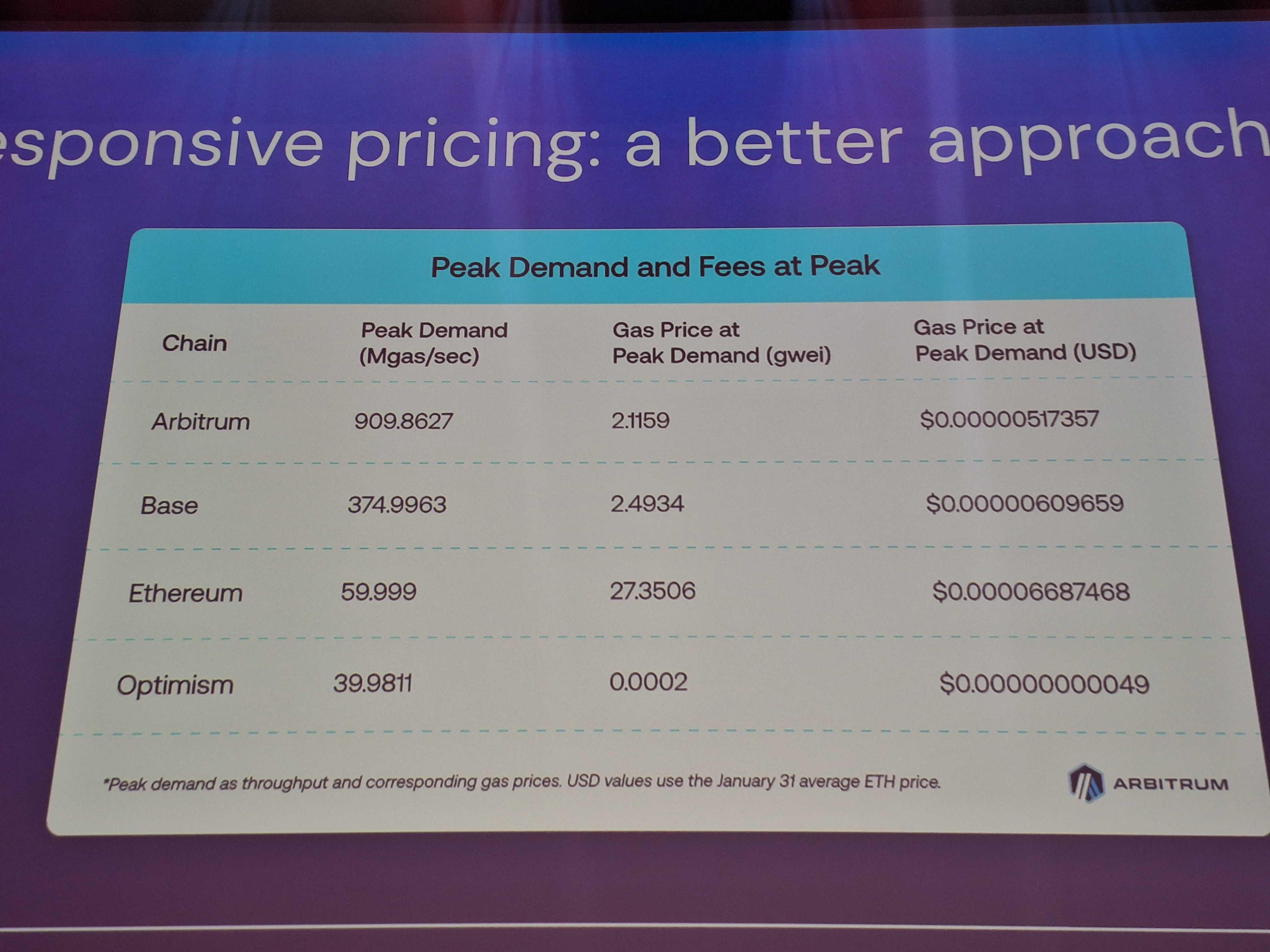
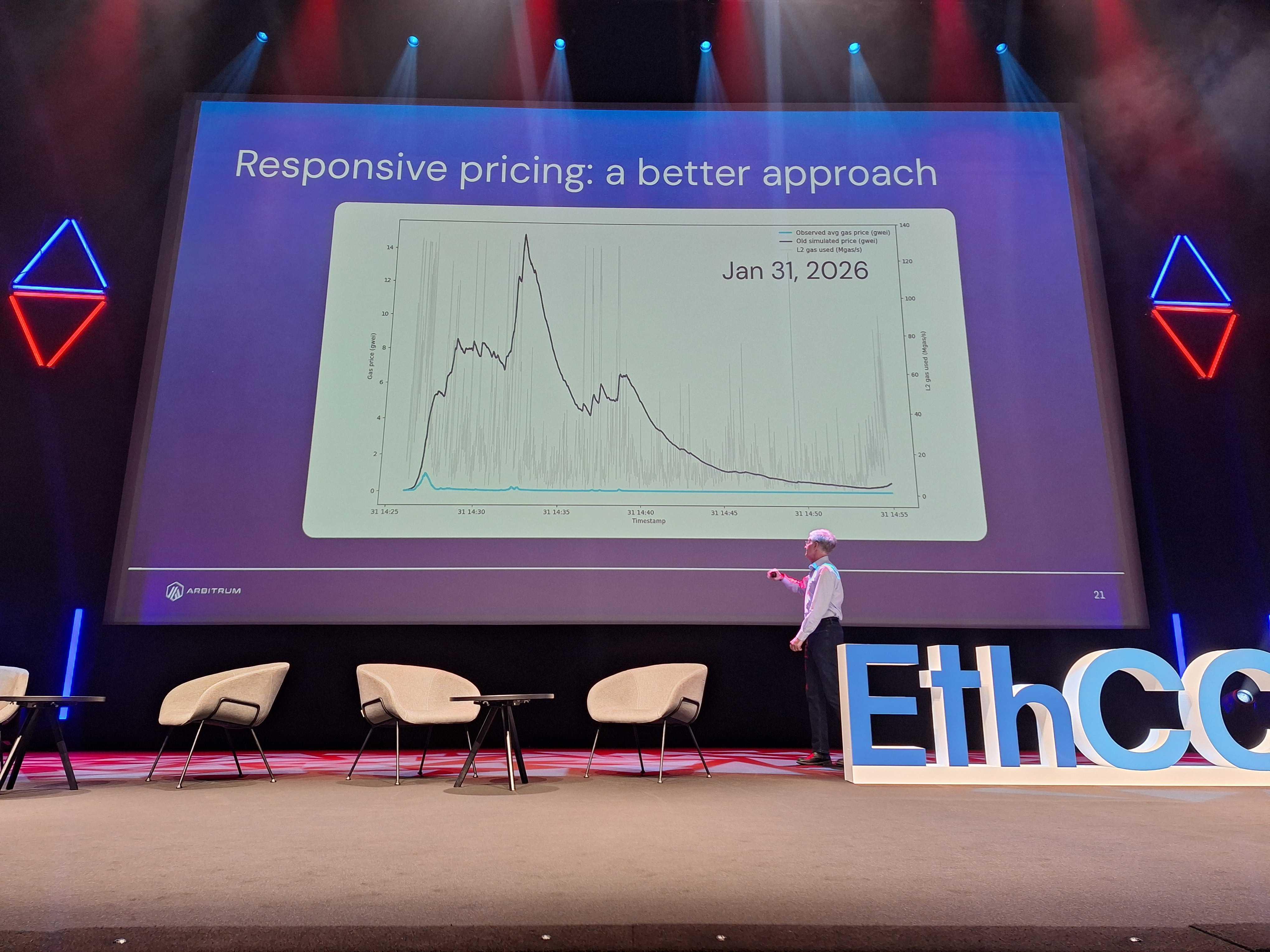
Felten deelde meerdere grafieken die aantoonden hoe de gaskosten van Arbitrum lager bleven tijdens pieknetwerkvolumes dan de kosten op het Base-netwerk en andere L2's die afhankelijk zijn van EIP-1559.
Arbitrum One is de grootste L2 met $15,2 miljard in TVL, terwijl Coinbase's Base Chain tweede is met $10,9 miljard, volgens gegevens van L2beat. L2's beveiligen meer dan $39,7 miljard aan cumulatieve TVL, een stijging van 4,6% in het afgelopen jaar.
Hoewel responsieve prijsstelling schaalbaarder en transparanter kan zijn over de onderliggende kosten, is het grootste nadeel de lagere voorspelbaarheid vergeleken met EIP-1559, aldus Julian Kors, senior ontwikkelaar en oprichter van de startup Pulsar Spaces.
Het debat gaat er niet om welk model beter is, maar of netwerken optimaliseren voor "voorspelbaarheid en zuiverheid van mechanismeontwerp of voor efficiëntie en real-time kostenafstemming. EIP-1559 doet het eerste erg goed. Responsieve prijsstelling neigt naar het tweede," vertelde hij aan Cointelegraph.
Gerelateerd: Ethereum Foundation versnelt 70.000 ETH staking plan na BitMine verkoop
Jerome de Tychey, president van Ethereum France en EthCC, vertelde Cointelegraph dat responsieve prijsstelling de gebruikerservaring zou kunnen verbeteren door de kosten de werkelijke netwerkvraag nauwkeuriger te laten weerspiegelen.
Cyprien Grau, projectleider bij het gasloze Ethereum L2 Status Network, was het ermee eens en noemde het nieuwe prijsmodel een "werkelijke verbetering in de nauwkeurigheid van de vergoedingen." Het model vertrouwt echter nog steeds op een "vergoedingenmarkt," wat betekent dat gebruikers nog steeds te maken kunnen krijgen met variabele kosten en gasspieken tijdens congestie, vertelde hij aan Cointelegraph.
“Het lost het structurele probleem niet op: L2-gaskosten neigen naar nul naarmate schaalbaarheid op L1 en L2’s verbetert en concurrentie intensiveert. Responsieve prijsstelling maakt de daling soepeler, maar je bouwt nog steeds een verdienmodel op een afschrijvend actief.”
Grau voegde eraan toe dat responsieve prijsstelling de "meest geavanceerde versie van het gasmodel" is, maar zei dat het gasmodel vervangen moet worden. "L2’s die schalen naar miljarden gebruikers zullen degenen zijn waar gebruikers helemaal niet aan gas denken, en waar de economie van netwerken niet afhangt van het in rekening brengen ervan," voegde hij toe.
Het debat over het vergoedingsmodel komt op een moment dat delen van het Ethereum-ecosysteem al de oorspronkelijke rollup-gerichte schaalbaarheidsthesis heroverwegen. In februari betoogde Vitalik Buterin dat sommige laag-2 aannames niet langer standhielden en dat toekomstige schaalbaarheid meer zou moeten vertrouwen op het mainnet en native rollups.
L2-netwerken werden gecreëerd om Ethereum te schalen en een deel van de transactiebelasting van het mainnet af te halen. Ethereum heroverweegt nu echter zijn L2-gerichte aanpak, aangezien deze netwerken aanzienlijke economische waarde van het mainnet hebben afgetapt.
Magazine: Ethereum’s Fusaka fork uitgelegd voor dummies — Wat is PeerDAS in hemelsnaam?