Ticket (TICKET)

Buy Ticket (TICKET) in Japan

Learn how to buy Ticket (TICKET) on LBank, including payment methods such as credit cards, debit cards, Apple Pay, and bank transfers, as well as the purchase process, preparations, and FAQs.

Step 1
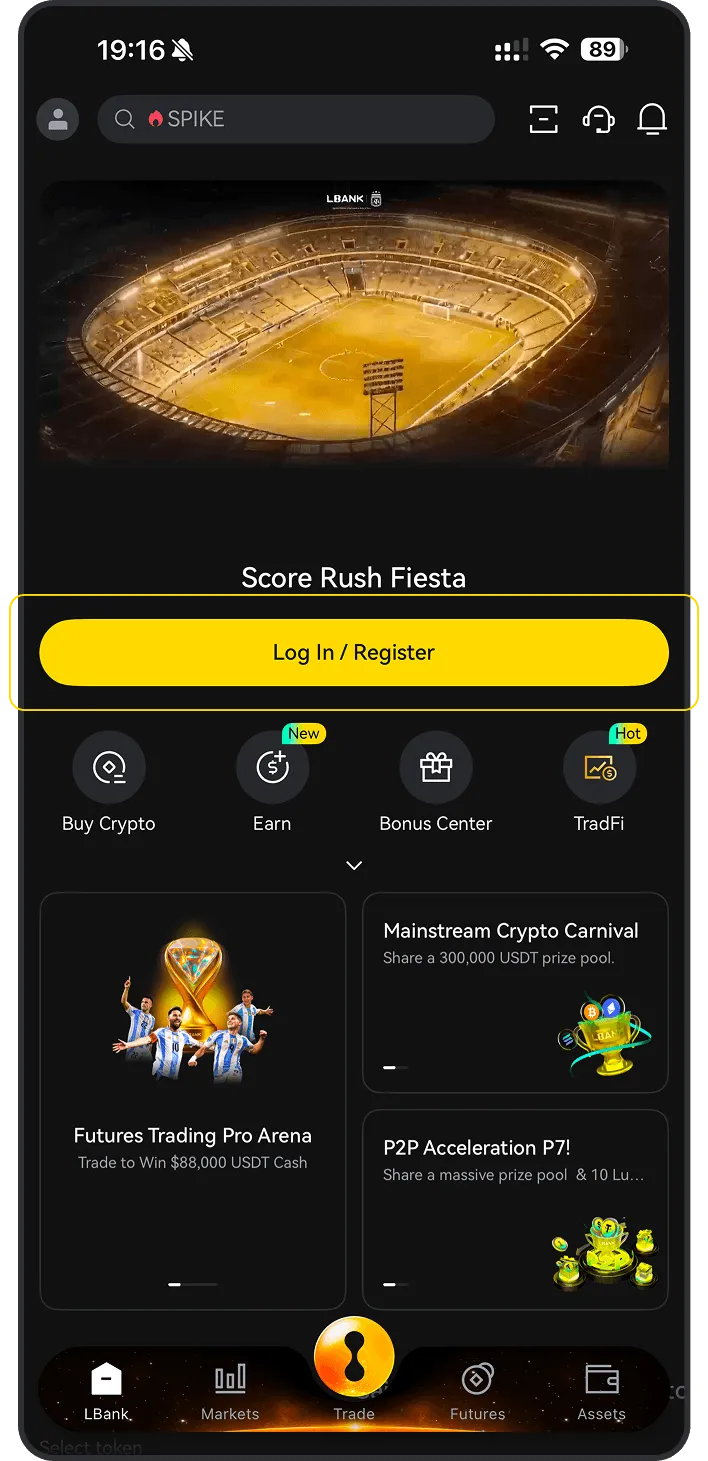
Download the LBank App
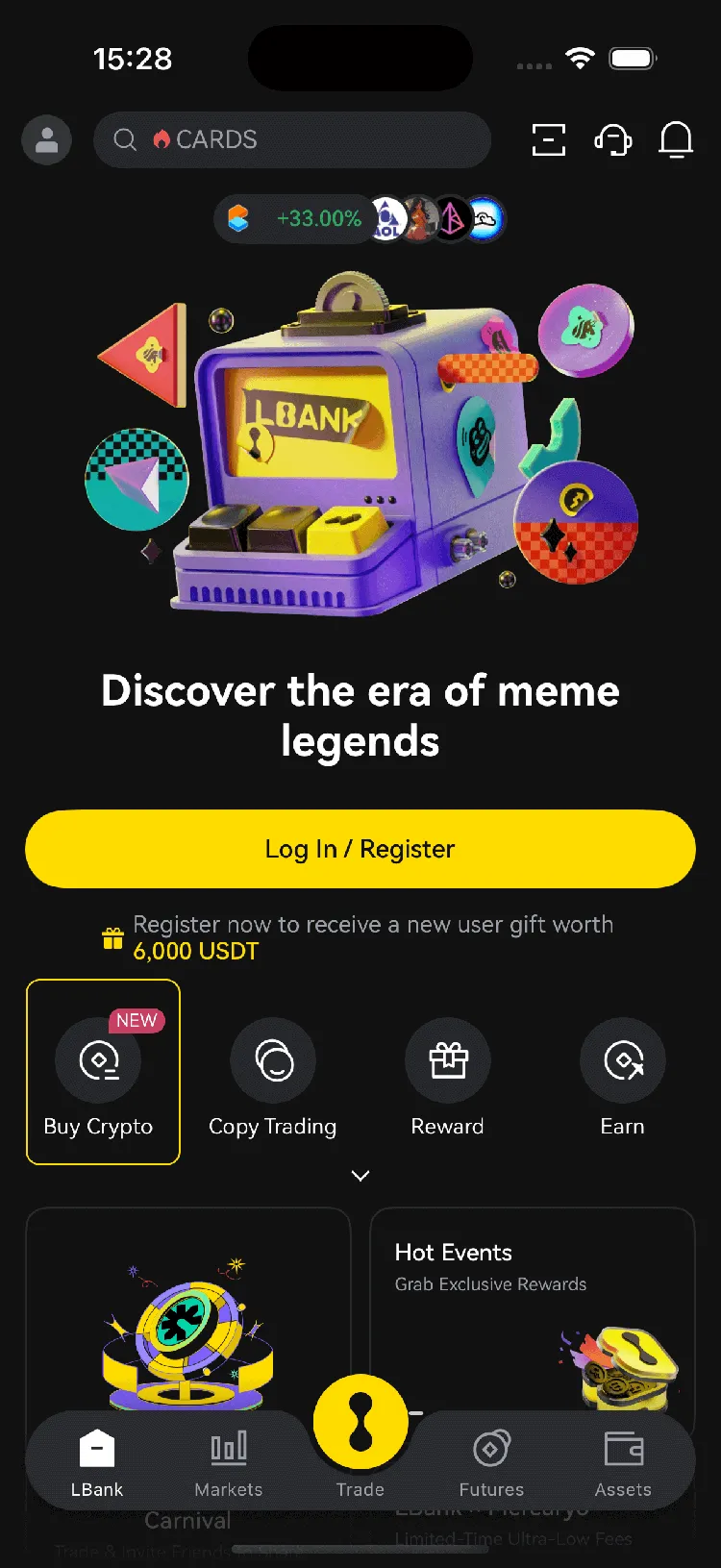
Please download the LBank App and register to get started
Step 2
Fund your account
Deposit using your preferred payment method.
Step 3
Choose your cryptocurrency
Select the crypto you want to buy from over 3,000,000 cryptocurrencies available on LBank Exchange or Wallet.

Purchase Decision Overview

Credit / Debit Card

Credit / Debit Card

Fee
Variable Fees
Processing Time
Usually within 1 minute, up to 48 hours
Minimum Purchase Amount
Starting from approx. 10–15 USD
Supported Regions
Subject to region, fiat currency, issuing bank, and payment channel support
Bank Transfer / Local Transfer

Bank Transfer / Local Transfer

Fee
Variable Fees
Processing Time
Depends on the payment method; some local channels may be faster
Minimum Purchase Amount
Starting from approx. 1–10 USD
Supported Regions
Subject to local payment channel support

Three Simple Steps to Buy TICKET on LBank

Register an LBank account

How to Buy TICKET on LBank: Payment Methods Overview

Explore the available payment methods for buying TICKET on LBank, including credit card, debit card, bank transfer, Apple Pay, Google Pay, PayPal, and P2P, to quickly choose the most suitable way to buy TICKET.

Credit / Debit Card
Credit / Debit Card
Processing Time: Usually within 1 minute; up to 48 hours
Use a Visa/Mastercard that supports international online transactions and ensure 3D Secure is enabled; if it fails, try a different card or try again later
Common Reasons for Failure: The issuing bank declined the cryptocurrency transaction; insufficient balance; 3D Secure verification failed; risk control interception; or region/card network not supported
Bank Transfer / Local Transfer
Processing Time: Instant or 1–3 Business Days
Verify the receiving account, reference code, and transfer network, and use a bank account consistent with your identity verification
Common Reasons for Failure: Incorrect receiving information or reference code; name mismatch; bank processing delay; or unsupported transfer network

What Do You Need to Prepare Before Buying Ticket (TICKET) on LBank?

Check the preparations required before buying Ticket (TICKET) on LBank, including account registration, identity verification (KYC), payment methods, regional availability, and pre-purchase precautions to help you smoothly complete the BTC purchase process.

Suitable for
Users who want to quickly buy TICKET with fiat
Before You Buy: Checklist
Register and log in to your account
Complete required KYC
Prepare payment method
Confirm regional availability,Check limits / fees / processing time
User Path
Buy Crypto

How to Buy Ticket on LBank – Step-by-Step Guide

Before you begin, decide how you’d like to pay:

Pay with fiat

If you're new to crypto, using fiat currency (such as USD, EUR, etc.) is the easiest way to buy Ticket. LBank supports various payment methods, including debit cards, credit cards, bank transfers, and other local payment options where available. You may need to fund your LBank account before making a purchase.

Pay with other cryptocurrencies

If you already hold other cryptocurrencies, you can trade them for Ticket on LBank. Please make sure that LBank supports the trading pair you need (e.g., Bitcoin (BTC)). LBank offers a wide range of trading pairs, allowing you to conveniently convert your existing crypto into Ticket.

LBank supports multiple payment methods

You can use the following payment methods to purchase Ticket on LBank:

Debit card
Credit / Debit Card
PayPal
Apple Pay
Google Pay

Mobile app guide

1
Open the LBank mobile app and tap “Buy Crypto”
2
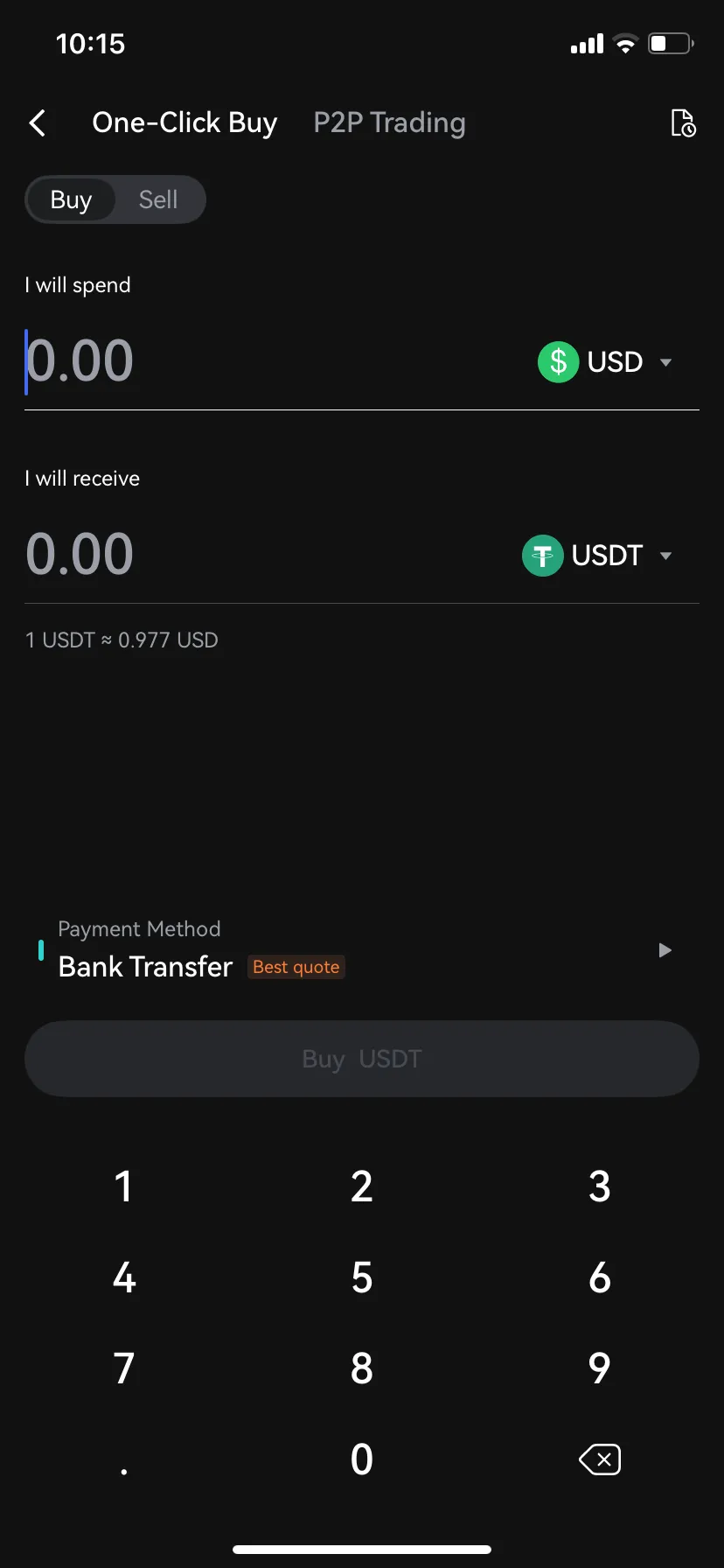
Select “Buy”
3
Choose , enter the fiat currency you want to use, input the amount, then tap “Buy” or “Confirm”

Desktop guide

1
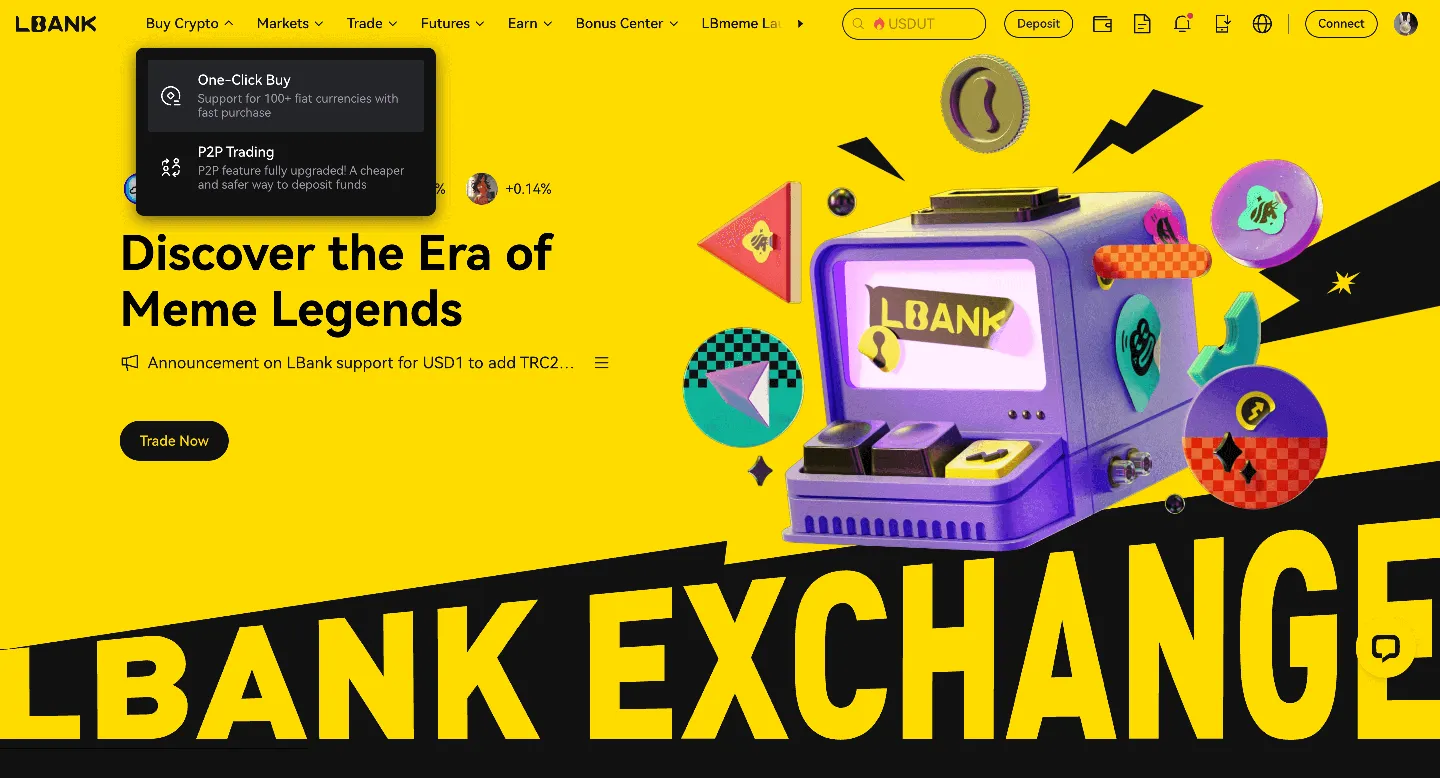
Log in to LBank on your desktop browser and click the “One-Click Buy” option.
2
Under the “One-Click Buy” tab:

(a). Choose the fiat currency you want to use

(b). Select the Ticket you want to purchase

(c). Enter an amount or use quick-select options (e.g., 100, 200, 500, max)
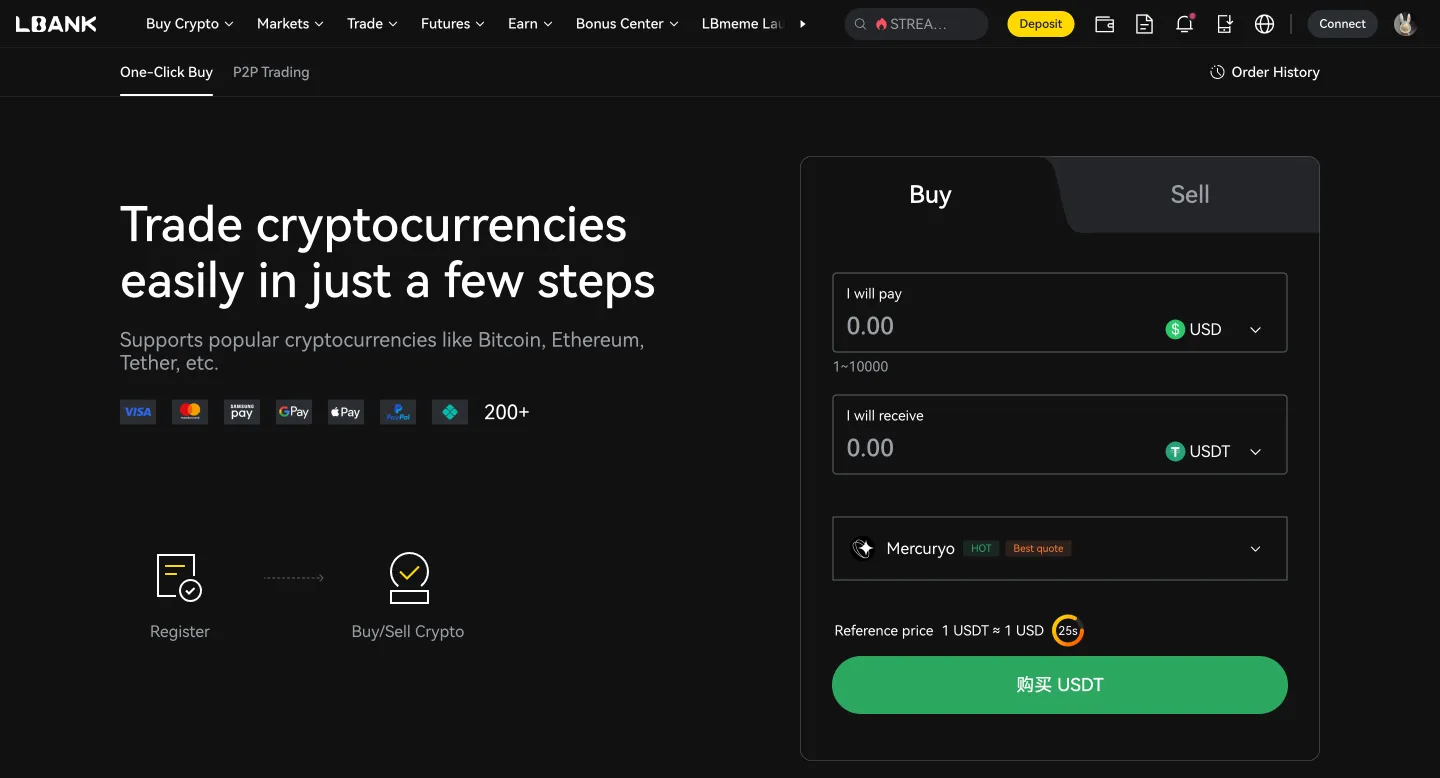
(d). Choose your payment method
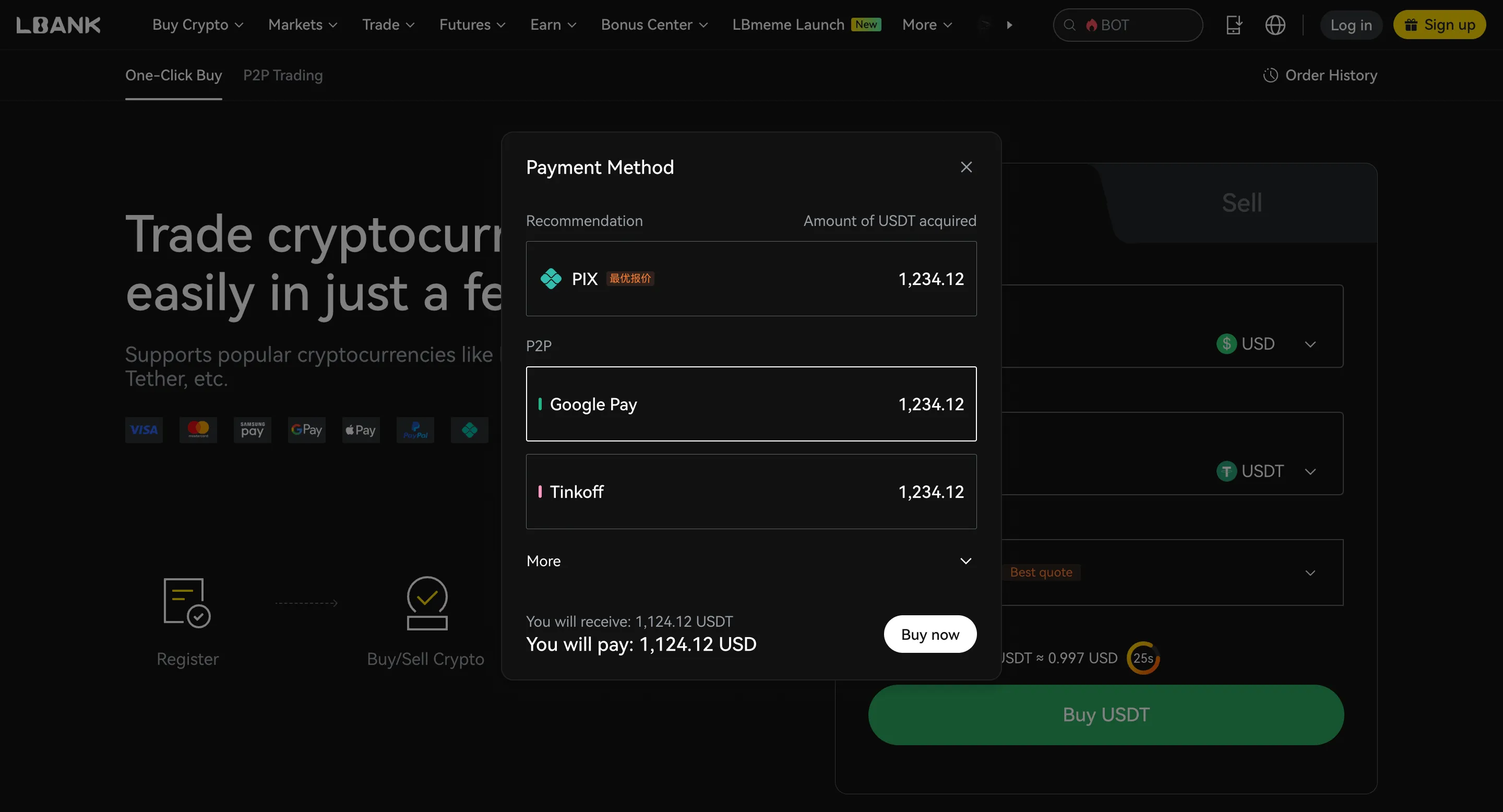
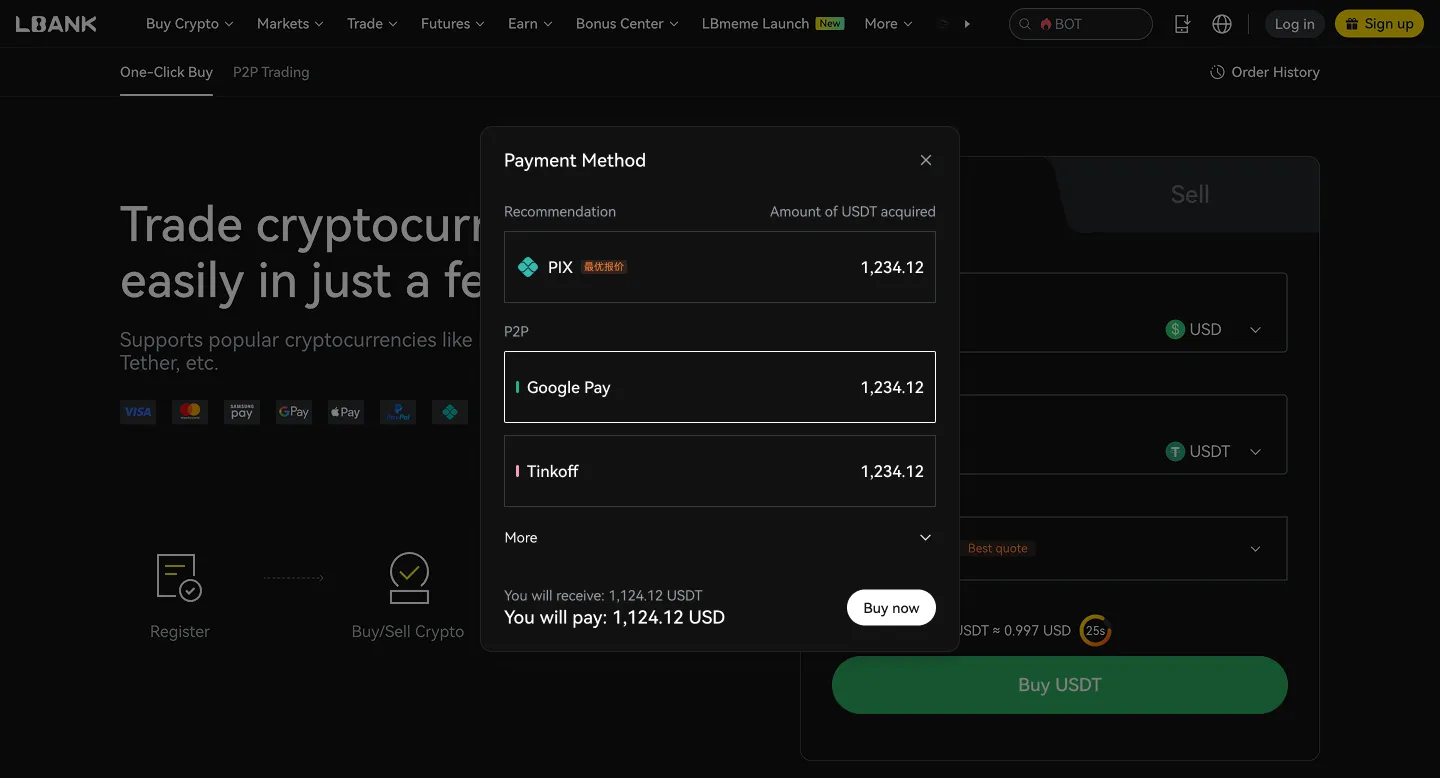
(e). Click “Confirm” or “Buy now”
P2P Trading

Merchant
Price
Amount | Limit
Payment Method
Action
ON
ONLY-MALAYSAN-MYR
691 min | 91.3%
1.000 USD
3356.47 USDT
10.000 - 3000.000USD
Bank Transfer
BA
Bayon KH
649 min | 100%
1.002 USD
3983.17 USDT
10.000 - 1000.000USD
Wing Money
Bank Transfer (Cambodia)
ABA (Cambodia)
MX
MX Exchange 汇旺
305 min | 100%
1.003 USD
2240.62 USDT
55.000 - 2200.000USD
Wing Money
True Money (Cambodia)
ABA (Cambodia)

What is Ticket (TICKET)?

The term 'Ticket' in the context of crypto and Web3 projects primarily refers to the concept of token-based ticketing, where event tickets are created and managed using blockchain technology. The search results do not identify a singular crypto project or token specifically named 'Ticket' with a distinct, universal identity across the Web3 space. Instead, various projects and platforms utilize tokens, often non-fungible tokens (NFTs), to revolutionize the ticketing industry. Blockchain ticketing aims to address long-standing issues in traditional ticketing, such as fraud, counterfeiting, and scalping. By minting tickets as NFTs on a blockchain, each ticket becomes a unique digital asset, ensuring its authenticity and traceability. This makes it impossible to forge or duplicate tickets, as every transaction and change of ownership is immutably recorded on the blockchain. The technology allows for increased transparency and control over the secondary market. Smart contracts can be programmed to set limits on resale prices or to ensure that a portion of secondary sales revenue goes back to event organizers or artists. This provides organizers with greater control over ticket distribution and pricing, while also offering clear insights for attendees. Beyond just entry to an event, token-based tickets can offer enhanced fan experiences. They can be used for token-gated access, granting holders exclusive perks like pre-sales, merchandise, backstage passes, or even digital collectibles. These tokens can also act as loyalty program cards and can unlock various experiences within a community. Many Web3 ticketing platforms leverage smart contracts, often built on blockchains like Ethereum, NeoX, or Avalanche. These smart contracts manage ticket creation, transfer, and validation. The use of Web3 wallets simplifies the storage and management of these digital tickets for users. Some projects specifically mentioned in the context of blockchain ticketing include Seatlab, KryptoTix, EventChain, and the OPEN Ticketing Ecosystem. In essence, a 'ticket' in the cryptocurrency and Web3 domain represents a digital claim or entitlement to an asset or service, managed securely and transparently on a blockchain. This approach aims to create a more efficient, secure, and engaging experience for both event organizers and attendees. Learn more

Is Ticket (TICKET) a good investment?

Whether Ticket (TICKET) is a good investment depends on your personal financial situation and risk tolerance. Cryptocurrency investments are speculative and can be highly volatile.


Before investing in Ticket (TICKET) or any cryptocurrency, consider the following:

Your financial goals
Are you seeking short-term gains or long-term growth?
Your risk tolerance
Your risk tolerance
How much potential loss are you comfortable with?
Diversification
Diversification
Don’t put all your eggs in one basket. Spread your investments across different types of assets.
Your goals and time horizon
Cryptocurrencies are best suited for long-term investors. Disclaimer: This is not financial advice. Please do thorough research before making any investment decisions.

Fees, limits, and processing time for buying TICKET on LBank

Compare fees, transaction limits, and estimated processing times across different payment methods. Actual fees and availability may vary by region, fiat currency, payment method, and third-party providers. Please refer to the order page for final details.

ROI calculator

If I invest, how much profit will I make?
Invest
$
Enter
TICKET
Date
2026-06-03
You will earn $-- in profit, with an ROI of --

What can you do with Ticket (TICKET)?

Investment
Buy and hold Ticket (TICKET), expecting its value to increase over time.
Investment
Trade
Actively trade Ticket (TICKET) on LBank to profit from price fluctuations.
Trade
Pay
Use Ticket (TICKET) to pay for goods and services where accepted.
Pay

Why is LBank the best platform to buy Ticket (TICKET)?

User-friendly interface
LBank offers a simple and intuitive platform for buying and selling Ticket (TICKET).
Competitive fees
Competitive fees
LBank provides competitive trading fees for Ticket (TICKET).
Secure platform
Secure platform
LBank applies robust security measures to protect your funds.
Diverse trading pairs
LBank offers a wide range of trading pairs for Ticket (TICKET).
24/7 customer support
LBank provides customer support to help you with any questions or issues.
Mobile app
Mobile app
Trade Ticket (TICKET) anytime, anywhere using the LBank mobile app.
High liquidity
High liquidity
LBank offers excellent liquidity for Ticket (TICKET) trading, ensuring you can easily buy and sell your crypto assets.
Regulatory compliance
LBank complies with all regulatory requirements in the jurisdictions where it operates to ensure a compliant and secure trading environment

After buying TICKET, what is the best way to store it?

After buying TICKET, you can choose a storage method based on your usage frequency, holding period, and security needs. If you need to trade at any time, you can store it in your LBank account. If you prioritize self-custody or long-term security, consider using a personal wallet or a hardware wallet.

Store in your LBank account

Store in your LBank account

Suitable for
Users who want to trade or convert at any time
Short-term BTC holders
Features
Ready to use immediately after purchase; easier to use
Ideal for frequent trading, conversions, or using platform features
Security Alert
Please enable 2FA
Please set an anti-phishing code
Only log in through official channels
Transfer to a personal hot wallet

Transfer to a personal hot wallet

Suitable for
Users who want to manage their own assets
Users who need daily transfers or on-chain usage
Features
More flexible; convenient for daily transfers and management
Better suited for small holdings and everyday use
Security Alert
Do not store seed phrases or private keys in the cloud
Do not save sensitive information via chat tools, email, or screenshots
Stay alert for phishing websites and fake wallet apps
Transfer to a hardware wallet

Transfer to a hardware wallet

Suitable for
Long-term BTC holders
High-value holders who prioritize security
Features
Private keys are stored offline, offering enhanced security
Ideal for long-term storage of infrequently moved assets
Security Alert
Securely back up seed phrases offline
Never disclose your recovery phrase to anyone
Assets may be irrecoverable if the seed phrase is lost

Ticket (TICKET) FAQ

Security is paramount when interacting with the TICKET protocol. Always use official contract addresses and front-end interfaces, which can be found on the project's primary social media channels or through established ecosystem partners. The TICKET project is designed as a native asset, meaning interactions should primarily occur via its official, verified staking portal. It is crucial to avoid clicking on links from unverified sources, suspicious direct messages, or unsolicited emails, as these are common vectors for phishing attacks. Always double-check URLs and ensure they are exactly as published by the official project channels.
No, you should never send TICKET tokens directly to a staking contract address as a standard transfer. Doing so will likely result in the permanent loss of your funds, as the contract is not designed to recognize or process direct transfers as staking contributions. The correct and only method to stake your TICKET tokens is to use the project's official decentralized application (dApp) and its designated staking function. This dApp facilitates the interaction with the smart contract in the intended manner, ensuring your tokens are correctly deposited and managed within the staking mechanism.
Users should exercise extreme caution regarding wallet permissions requested by decentralized applications (dApps). Be wary of dApps that request 'unlimited token approvals' or ask for suspicious, overly broad permissions. Unlimited approvals can allow a malicious dApp to spend all your tokens of a certain type at any time without further consent. Always grant only the necessary minimum permissions. Regularly review and revoke active allowances for dApps you no longer use or trust. Tools are available in the Web3 ecosystem that allow you to check and revoke active allowances, enhancing your security posture and protecting your TICKET tokens and other assets.
For a project involving tokenized tickets, the value proposition often addresses significant issues prevalent in traditional ticketing. This includes combating rampant ticket scalping, reducing hidden fees that inflate consumer costs, and ensuring the absolute authenticity of tickets to prevent fraud. Furthermore, such projects can enable new revenue streams for event organizers and artists through mechanisms like royalties on secondary sales. By leveraging blockchain technology, the project provides transparent, verifiable ownership and transaction histories, enhancing trust and efficiency in the event ticketing industry for both consumers and creators.
Web3, often referred to as Web 3.0, signifies the third generation of the internet, striving for a more decentralized, intelligent, and open digital environment. Its key differentiator from Web2 lies in its architecture. Web2 is largely dominated by centralized entities and platforms, where user data is typically controlled by corporations. In contrast, Web3 applications are built on decentralized technologies, primarily blockchains, empowering users with greater control over their data, privacy, and digital identities. This shift aims to reduce reliance on intermediaries, foster transparent interactions, and enable direct, peer-to-peer value exchange, thereby decentralizing power from large tech companies back to individual users.
Tokenomics refers to the economic model governing a project's native token, encompassing its supply, distribution mechanisms, and various use cases within the ecosystem. Key aspects include the total and circulating supply, how tokens are initially allocated (e.g., to the team, community, investors), and their utility. For general Web3 tokens, use cases might include governance participation, staking for network security or rewards, paying for transaction fees, or accessing specific platform features. Understanding tokenomics is crucial because it helps users grasp how the token accrues value, its potential for inflation or deflation, and how it incentivizes participation and aligns interests within the project's community.

How to buy other crypto assets