Investment & Trading
Cryptocurrency
DeFi, NFT, and Web3

What is Leverage Trading and How Does It Work? A Complete Guide for 2026

abeebeko
2026-02-25
Leverage trading lets you control larger positions with less capital. This 2026 guide explains how it works, key risks, margin, liquidation, and how traders use leverage responsibly.
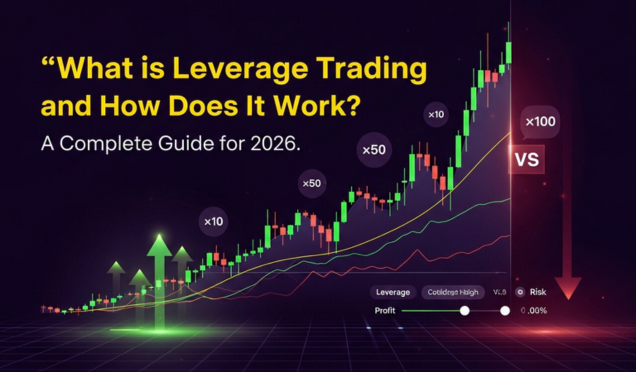
Leverage trading has become the defining feature of modern cryptocurrency markets, enabling traders to multiply their market exposure and potential profits with a fraction of the capital traditionally required. In 2026, LBank stands at the forefront of this revolution, offering some of the industry's most competitive leverage options, up to 125x on major pairs like BTC/USDT and ETH/USDT, and even up to 200x on specific memecoin contracts through their innovative Omni Futures platform.


But with great power comes significant responsibility. This comprehensive guide will demystify leverage trading, explain exactly how it works on LBank's platform, and teach you the critical risk management techniques that separate successful leverage traders from those who lose everything.


Understanding the Multiplier: What Is Leverage?


At its core, leverage is a financial tool that allows you to control a much larger position than your actual capital would normally permit. Think of it as a multiplier on your trading power, with 10x leverage, $1,000 of your own money allows you to control a $10,000 position. With 100x leverage, that same $1,000 controls $100,000 worth of cryptocurrency.


The mechanism works through margin trading. Your initial deposit (the margin) acts as collateral, and the exchange effectively lends you the additional capital needed to open the larger position. This borrowed capital isn't a traditional loan; you don't pay interest on it. Instead, leverage trading involves other costs like funding rates (for perpetual contracts) and the ever-present risk of liquidation if the market moves against you.


The 2026 Leverage Landscape: LBank has positioned itself as an industry leader by offering leverage ratios that cater to every trading style. For traders focused on Bitcoin and Ethereum, the platform provides up to 125x leverage on BTC/USDT and ETH/USDT perpetual contracts. This extraordinary multiplier enables maximum capital efficiency for experienced traders who understand the associated risks.


Even more remarkably, LBank's recently upgraded Omni Futures platform offers leverage options for memecoin trading that were previously unimaginable. With over 200 SOL and BSC-based meme futures launched daily and support for 236+ memecoin futures contracts, LBank enables traders to access high-leverage opportunities on emerging tokens with the same professional infrastructure available for major cryptocurrencies. The platform's Liquidity as Launch (LAL) framework ensures deep liquidity from day one, addressing the traditional challenge of thin order books that plague memecoin trading.


The Math of Leverage: Understanding the Double-Edged Sword

To truly grasp how leverage affects your trading, you need to understand the mathematics that govern leveraged positions. The fundamental principle is simple but profound: leverage multiplies both your gains and your losses by the same factor.


Example 1: The Power of 100x Leverage


Suppose you open a long position on Bitcoin at $70,000 with 100x leverage and $100 of your own margin:

  1. Position Size: $100 × 100 = $10,000 worth of Bitcoin
  2. Bitcoin Amount: $10,000 ÷ $70,000 = 0.1429 BTC


Scenario A - Profit: Bitcoin rises to $70,700 (a 1% gain)

  1. Position Value: 0.1429 BTC × $70,700 = $10,100
  2. Your Profit: $10,100 - $10,000 = $100
  3. Return on Margin: $100 profit ÷ $100 margin = 100% return

You've doubled your money with just a 1% price move. This is the seductive power of leverage; small market movements create exponential returns on your margin.


Scenario B - Loss: Bitcoin falls to $69,300 (a 1% loss)

  1. Position Value: 0.1429 BTC × $69,300 = $9,900
  2. Your Loss: $10,000 - $9,900 = $100
  3. Return on Margin: -$100 loss ÷ $100 margin = -100% (Total Liquidation)

A mere 1% adverse price move completely wipes out your margin. At 100x leverage, you have essentially zero room for error. Your liquidation price sits just 1% away from your entry price.


Example 2: Conservative Leverage at 10x


The same trade structure but with 10x leverage demonstrates why lower leverage provides breathing room:

  1. Position Size: $1,000 × 10 = $10,000 worth of Bitcoin
  2. Your Margin: $1,000


Scenario A - Profit: Bitcoin rises 1% to $70,700

  1. Your Profit: $100
  2. Return on Margin: $100 ÷ $1,000 = 10% return


Scenario B - Loss: Bitcoin falls 1% to $69,300

  1. Your Loss: $100
  2. Return on Margin: -$100 ÷ $1,000 = -10% loss


Still painful, but you're far from liquidation. At 10x leverage, Bitcoin would need to fall approximately 10% before your position is liquidated, giving you vastly more room to weather normal market volatility.


The lesson is clear: higher leverage amplifies everything. A 5x increase in leverage (from 10x to 50x) doesn't make you 5 times more vulnerable; it makes you exponentially more vulnerable because your margin depletes faster and your liquidation price sits much closer to your entry.


IMAGE: by Author


Margin Modes: The "Submarine" Strategy vs. Shared Risk


LBank offers two distinct margin modes, each with its own risk-reward profile. Understanding when to use each mode is crucial for managing your leverage trading effectively.


Isolated Margin: The Submarine Compartment Strategy


Isolated margin is like a submarine with watertight compartments. If one compartment floods, the rest of the submarine remains safe. Similarly, isolated margin restricts your risk to only the capital allocated to that specific trade.


How It Works: When you open a position in isolated mode, only the margin you assign to that specific trade can be lost if liquidation occurs. Your other open positions and the remaining balance in your futures wallet are completely protected.


Example: You have $5,000 in your LBank futures wallet. You open a Bitcoin long position with $500 margin in isolated mode at 50x leverage. If Bitcoin moves against you and this position gets liquidated, you lose only the $500 allocated to this trade. Your remaining $4,500 is safe and can be used for other opportunities.


When to Use Isolated Margin:

  1. You're trying a risky or experimental strategy
  2. You're trading highly volatile memecoins where liquidation risk is elevated
  3. You're a beginner learning leverage trading and want to limit potential damage
  4. You want precise risk control on each trade
  5. You're trading multiple positions simultaneously and want to prevent one bad trade from affecting the others


Submarine Analogy: Just as a damaged submarine compartment can be sealed off to prevent the entire vessel from sinking, isolated margin quarantines each trade's risk. This mode is strongly recommended for beginners starting their leverage trading journey on LBank.


Cross Margin: The Shared Collateral Approach


Cross margin mode pools your entire futures wallet balance as collateral for all your open positions. Any unrealised profits from one position can help support margin requirements for other positions, and your total account balance defends against liquidation.


How It Works: All positions share the same margin pool. If one position is approaching liquidation, profits from other positions or your available balance can prevent it, assuming your total account equity remains above the maintenance margin requirement.


Example: You have $5,000 in your futures wallet. You open a Bitcoin long with a $2,000 margin in cross mode. Bitcoin drops, and this position is losing money. However, you also have an Ethereum short that's profitable. The profits from your ETH short help support your BTC long position, potentially preventing liquidation that would have occurred in isolated mode.


Benefits of Cross Margin:

  1. Protection against brief "wick" liquidations where price spikes momentarily
  2. More capital efficiency as your entire balance works for you
  3. Ability to pyramid into winning positions using unrealised profits
  4. Better for traders managing a portfolio of correlated positions


The Critical Danger: While cross margin prevents some liquidations, it creates catastrophic risk if the market moves strongly against your overall position. A major adverse move can liquidate your entire futures account balance, not just one position's margin. The submarine analogy breaks down here; one breach floods the entire vessel.


When to Use Cross Margin:

  1. You're an experienced trader who actively manages positions
  2. You're confident in your overall portfolio direction
  3. You're trading liquid markets where sudden gaps are less likely
  4. You have a hedging strategy where multiple positions offset each other
  5. You understand and accept the risk of total account loss


Understanding Liquidation Price

Your liquidation price is perhaps the single most important number in leverage trading. It's the price level where your losses equal your initial margin, triggering automatic closure of your position by the exchange.


Calculating Liquidation Price

The exact formula varies based on leverage and margin mode, but the conceptual understanding is what matters:


For Long Positions: Liquidation occurs when price falls to the point where your losses equal your margin (minus a small maintenance margin buffer).

Liquidation Price ≈ Entry Price × (1 - 1/Leverage)

At 100x leverage longing Bitcoin from $70,000:

  1. Liquidation Price ≈ $70,000 × (1 - 1/100) = $70,000 × 0.99 = $69,300

At 10x leverage longing Bitcoin from $70,000:

  1. Liquidation Price ≈ $70,000 × (1 - 1/10) = $70,000 × 0.90 = $63,000


For Short Positions: Liquidation occurs when price rises to the point where your losses equal your margin.

Liquidation Price ≈ Entry Price × (1 + 1/Leverage)

At 100x leverage shorting Bitcoin from $70,000:

  1. Liquidation Price ≈ $70,000 × (1 + 1/100) = $70,000 × 1.01 = $70,700


Maintenance Margin Rate (MMR): The 2026 Standard

Modern exchanges, including LBank, employ a maintenance margin rate (MMR) system to protect both traders and the exchange's liquidity. The MMR represents the minimum margin level you must maintain to keep your position open.


How MMR Works: Different position sizes require different maintenance margins. Larger positions typically require higher MMR percentages because they pose a greater risk to exchange liquidity if liquidated improperly.


Example MMR Tiers (illustrative, check LBank's current specifications):

  1. Positions under $50,000: 0.5% MMR
  2. Positions $50,000-$250,000: 1.0% MMR
  3. Positions $250,000-$1,000,000: 2.5% MMR

Your margin ratio is calculated as: (Margin Balance / Position Value) × 100%


If your margin ratio falls below the MMR for your position size, liquidation is triggered automatically.


Critical Insight: This means simply having "some" margin left isn't enough. You must maintain the specific MMR percentage for your position size. This is why the LBank Futures Calculator is essential; it shows your exact liquidation price, accounting for MMR, fees, and other factors.


Using the LBank Futures Calculator

Before entering any leveraged trade on LBank, always use the platform's futures calculator to determine:

  1. Your exact liquidation price
  2. The dollar amount you're risking
  3. The profit/loss at various price targets
  4. How funding rates will affect your position over time


Access the Calculator: Available directly on LBank's futures trading interface and through the platform's tools menu. Input your entry price, position size, leverage, and margin mode to see real-time risk calculations.


This calculator is not optional for serious traders; it's the difference between trading with precision and gambling blindly.


IMAGE: by Author


The Cost of Leverage: Fees Beyond the Trade


Leverage trading involves more than just trading fees. Understanding the complete cost structure helps you calculate true profitability.


Trading Fees: LBank's Competitive 2026 Structure


LBank maintains one of the industry's most competitive fee structures for futures trading:

Maker Fees: 0.02% - Applied when you add liquidity to the order book by placing limit orders that don't execute. Taker Fees: 0.06% - Applied when you remove liquidity by placing market orders or limit orders that execute immediately


Fee Example: Opening a $10,000 position (whether with 2x or 100x leverage, fees are on notional value):

  1. Market order (taker): $10,000 × 0.06% = $6
  2. Closing with market order: $10,000 × 0.06% = $6
  3. Total round-trip cost: $12


For active day traders making dozens of trades, these fees compound significantly. Using limit orders to qualify for maker fees can dramatically reduce costs over time.


Volume Discounts: LBank offers tiered fee reductions based on 30-day trading volume. High-volume traders can reduce fees by 20-40%, substantially improving profitability for active strategies.


Funding Rates: The Hidden Cost of Perpetual Positions

While quarterly futures avoid funding rates entirely, perpetual contracts, the most popular leverage trading instrument, involve periodic payments between long and short position holders.


Funding Mechanism: Every 8 hours (00:00, 08:00, 16:00 UTC), perpetual contract holders either pay or receive funding based on the contract's premium or discount to spot price.

  1. Positive Funding: Perpetual trades above spot → Longs pay shorts
  2. Negative Funding: Perpetual trades below spot → Shorts pay longs


Cost Impact: Funding rates typically range from -0.05% to +0.10% per 8-hour period, though they can exceed these ranges during extreme market conditions.


Example: Holding a $10,000 leveraged long position for 24 hours:

  1. Average funding: +0.05% per 8 hours
  2. Three funding events in 24 hours
  3. Daily cost: $10,000 × 0.05% × 3 = $15 per day
  4. Monthly cost: $15 × 30 = $450 (4.5% of position value)


Over a month, high funding rates can seriously erode profits from even successful directional trades. This is why many long-term position traders prefer quarterly futures, which have no funding costs but converge to the spot price at expiration.


For detailed funding rate strategies and how to potentially earn from them rather than pay them, see our comprehensive guide: "What Are Funding Rates and How Do They Affect Your Trades?"


IMAGE: by Author


Advanced LBank Features for Leverage Traders

LBank has developed several innovative tools specifically designed to enhance leverage trading efficiency and risk management.


One-Click Reverse: Catching Market Pivots


One of LBank's most powerful features for active traders is the One-Click Reverse function. This tool allows you to instantly flip your position from long to short (or vice versa) at the same position size, enabling you to capitalise on sudden market reversals without the delay of manually closing and reopening positions.


How It Works: If you're holding a 1 BTC long position and the market suddenly shifts bearish, clicking "Reverse" instantly closes your long and opens a 1 BTC short position in a single action.


Use Cases:

  1. News-Driven Reversals: When major news breaks that changes your market outlook
  2. Technical Breakdowns: When a support level you're depending on breaks, and you need to flip bearish immediately
  3. Liquidation Avoidance: When you realise your position is wrong and need to exit and reverse quickly to salvage capital


Speed Advantage: In fast-moving markets, the seconds saved by One-Click Reverse versus manually closing and reopening can be the difference between catching a reversal profitably versus missing it entirely.


Risk Warning: This feature is powerful but dangerous if used impulsively. Only reverse when your analysis justifies it, not out of panic or frustration. Excessive reversing typically generates trading fees without improving profitability.


Leveraged Tokens: Leverage Without Liquidation


For traders who want leverage exposure without the constant liquidation risk, LBank offers leveraged tokens, a "leverage lite" alternative that fundamentally changes the risk dynamic.


How Leveraged Tokens Work: Rather than managing a leveraged position directly, you buy tokens that provide leveraged exposure to an underlying asset. LBank currently offers 3L (3x Long) and 3S (3x Short) tokens for major cryptocurrencies.


Key Advantage: No Liquidation Risk. Leveraged tokens rebalance automatically to maintain their target leverage, preventing liquidation. If Bitcoin falls 20%, a BTC3L token falls approximately 60%, but you can't be liquidated; you simply hold a token worth less.


The Rebalancing Effect: Daily rebalancing means leveraged tokens work best for short-term directional trades. Over longer periods, volatility decay can erode value even if the underlying asset eventually moves in your favour.


When to Use Leveraged Tokens:

  1. You're confident about short-term direction (hours to days)
  2. You want leverage without the stress of monitoring liquidation prices
  3. You're still learning leverage trading and want a less punishing educational experience
  4. You want to hold leveraged exposure without worrying about funding rates


5x Alternative: LBank's leveraged token structure actually supports up to 5x long and short positions without the need for margin, providing an even more aggressive option than the standard 3x tokens while still eliminating liquidation risk.


LBank Omni Futures: The Memecoin Trading Revolution


Perhaps LBank's most innovative 2026 development is the Omni Futures platform, which has revolutionised how traders access leverage on emerging memecoin assets.


The Problem Omni Solves: Traditionally, memecoins offered limited leverage options due to liquidity constraints and the lag between on-chain token launch and centralised exchange listing. By the time a memecoin reached major exchanges, early opportunities had already passed.


Omni's Solution: Through its Liquidity as Launch (LAL) framework, Omni Futures integrates on-chain data, real-time risk controls, and dynamic pricing models to enable rapid memecoin asset onboarding with deep liquidity from day one.


Key Statistics (February 2026):

  1. Over 200+ SOL and BSC-based meme futures launched daily
  2. 236+ memecoin futures are currently supported
  3. 700% surge in active user positions within 15 days of the recent upgrade
  4. Minimum margin of just 1 USDT for position opening


Trading Features:

  1. One-click position opening and closing
  2. Rapid position switching to capture short-term price movements
  3. Fixed leverage structures with integrated take-profit and stop-loss
  4. Cross-chain support without network switching


Why This Matters: Omni Futures allows traders to access high-leverage opportunities on memecoins with professional-grade infrastructure previously available only for major cryptocurrencies, this democratises access to one of crypto's most dynamic (and risky) sectors.


Risk Context: While Omni Futures provides the tools for memecoin leverage trading, these remain extremely high-risk trades. Memecoins are notorious for 90%+ drawdowns, and low liquidity can amplify price swings. Use Omni Futures only with capital you can afford to lose entirely, and favour isolated margin mode to contain risk.


Risk Management for Leverage Trading


The harsh reality of leverage trading is that most beginners lose money, not because they lack market analysis skills, but because they fail to manage risk. These principles are non-negotiable for long-term survival and profitability.


Rule 1: Never Use Maximum Available Leverage


Just because LBank offers 125x or even 200x leverage doesn't mean you should use it. Professional traders typically use 5x-20x leverage even when much higher is available.


Why Lower Leverage Wins: The difference between 10x and 100x isn't that 100x is "ten times better", it's that 100x gives you ten times less room for error. Market volatility that's completely normal at 10x will liquidate you instantly at 100x.


Recommendation by Experience Level:

  1. Beginners: 2x-5x maximum, preferably starting at 2x-3x
  2. Intermediate: 5x-15x depending on volatility and setup confidence
  3. Advanced: 10x-30x for clear setups; higher only for very short-term scalps
  4. Professional: Varies by strategy, but rarely exceeds 20x for swing trades


Rule 2: Use Stop Losses, Not Hope


Setting a stop loss before entering a trade is mandatory, not optional. Your stop loss should be based on technical invalidation points, not arbitrary percentages.


Stop Loss Placement: Beyond the level that invalidates your trading thesis. For longs, below recent support or swing lows. For shorts, above recent resistance or swing highs.


Leverage Adjustment: With higher leverage, your stop loss in dollars remains the same, but the price distance to your stop must be smaller. This is why lower leverage is superior; it allows you to place stops at technically logical levels without risking excessive capital.


Rule 3: Position Sizing Based on Dollar Risk, Not Leverage


Calculate your position size based on the dollar amount you're willing to risk, not on how much leverage sounds exciting.


Position Sizing Formula:

  1. Determine your risk per trade: 1-2% of total capital
  2. Identify your stop loss distance in price terms
  3. Calculate position size: (Account Size × Risk %) / Stop Loss Distance


Example: $10,000 account, willing to risk 2% ($200), stop loss 5% away from entry

  1. Position Size: $200 / 0.05 = $4,000 position
  2. At 10x leverage: $400 margin required
  3. At 50x leverage: $80 margin required

Both achieve the same $200 risk, but 10x is safer because your liquidation price is further away, giving the trade more room to breathe.


Rule 4: Start with Isolated Margin


Until you have extensive experience and thoroughly understand cross-margin dynamics, always use isolated margin mode. The damage from mistakes is contained, and you'll learn risk management more quickly when each trade's outcome is independent.


Comparison: Low vs. High Leverage Trading


To crystallise the strategic differences, here's a comprehensive comparison:


Feature

Low Leverage (2x - 10x)

High Leverage (50x - 125x)

Risk Level

Moderate; higher "breathing room"

Extreme; small moves trigger liquidation

Capital Efficiency

Medium; requires more margin

Maximum; minimal margin controls large position

Liquidation Distance

Far from entry (10-50% depending on leverage)

Very close to entry (0.8-2%)

Stress Level

Manageable; can step away from screens

High; requires constant monitoring

Best For

Swing traders / Position traders / Beginners

Scalpers / News-driven day traders / Experts only

Typical Hold Time

Hours to weeks

Minutes to hours

Stop Loss Placement

Flexible; can use technical levels

Constrained; must be very tight

Funding Cost Impact

Lower (smaller position relative to the capital)

Higher (larger position relative to capital)

Recovery Potential

Can weather drawdowns and recover

One mistake often means total loss

LBank Tool Recommendation

Isolated Margin; Leveraged Tokens for learning

Futures Calculator is mandatory


Getting Started: Your Action Plan for LBank Leverage Trading

Armed with knowledge, you're ready to begin, but start cautiously and build experience systematically.


Step 1: Education and Preparation

Before placing your first leveraged trade:

  1. Read the LBank Futures Trading User Guide thoroughly
  2. Watch LBank's tutorial videos on margin modes and leverage
  3. Practice calculating liquidation prices manually and with the calculator
  4. Paper trade (track hypothetical trades) for at least a week


Step 2: Start Extremely Small

Your first real leveraged trades should be tiny:

  1. Use 2x-3x leverage to the maximum
  2. Trade with 0.5-1% of your capital
  3. Focus on learning the platform mechanics, not making money
  4. Use isolated margin exclusively


Step 3: Master the Calculator

Before every trade, without exception:

  1. Use the LBank Futures Calculator to determine the liquidation price
  2. Calculate your dollar risk
  3. Verify your position size aligns with your risk management rules
  4. Set your stop loss in the order interface


Step 4: Track and Learn

Maintain a detailed trading journal:

  1. Entry price, exit price, leverage used, and margin mode
  2. Why you entered, what you expected, what actually happened
  3. Profits/losses and the lessons learned
  4. Review weekly to identify patterns in your decision-making


Step 5: Gradual Progression

Only increase leverage or position size after demonstrating consistent profitability:

  1. After 20+ profitable trades at 2x-3x, consider 5x
  2. After 50+ profitable trades at 5x, consider 10x
  3. Never rush to higher leverage; there's no prize for taking maximum risk


Essential Resources and Next Steps


Master the Platform:

  1. LBank Futures Trading User Guide: Comprehensive documentation covering all features, margin modes, and trading mechanics

Calculate Your Risk:

  1. LBank Futures Calculator: Essential tool for determining exact liquidation prices, profit targets, and position sizing

Start Trading:

  1. LBank Futures Market: Access the trading interface with all the tools discussed in this guide

Continue Learning:

  1. What Are Funding Rates and How Do They Affect Your Trades?: Deep dive into the costs of holding perpetual positions
  2. Understanding Perpetual Contracts vs. Quarterly Futures: Learn which contract type suits your strategy
  3. Risk-Reward Ratio: How to Calculate and Use It: Master the mathematics of profitable trading


Conclusion: Power and Responsibility


Leverage trading on LBank in 2026 offers unprecedented opportunities. With up to 125x leverage on major pairs, 200x options on memecoins through Omni Futures, innovative tools like One-Click Reverse and leveraged tokens, and industry-leading fee structures, LBank provides the infrastructure for sophisticated leverage trading strategies.


But opportunity and risk are inseparable. The same 100x leverage that can double your money with a 1% favorable move will wipe you out completely with a 1% adverse move. The traders who succeed with leverage understand that it's not about using maximum available leverage; it's about using the appropriate leverage for their strategy, experience level, and risk tolerance.


Start small, use isolated margin, calculate every risk meticulously, and never trade with money you can't afford to lose. The leverage trading game rewards discipline, patience, and systematic risk management. Master these principles, and the powerful tools LBank provides can accelerate your path to trading profitability. Ignore them, and even the best analysis won't save you from liquidation.


The choice is yours. Trade wisely.

Live Chat
Customer Support Team

Just Now

Dear LBank User

Our online customer service system is currently experiencing connection issues. We are working actively to resolve the problem, but at this time we cannot provide an exact recovery timeline. We sincerely apologize for any inconvenience this may cause.

If you need assistance, please contact us via email and we will reply as soon as possible.

Thank you for your understanding and patience.

LBank Customer Support Team