


Zakura released an open-source cryptography toolkit on Aug. 29 that reduced private Zcash transaction construction from more than three seconds to below 200 milliseconds in some benchmark tests.
The software, called Zakura Common, replaces several cryptographic components used when Zcash wallets create shielded transactions and full nodes verify them. Zakura reported its largest gains in proof generation, hashing and zk-SNARK verification.
Wallet and node developers can integrate the software without changing Zcash consensus rules. Adoption therefore does not require a hard fork, network upgrade or coordinated activation among node operators.
Shielded Zcash transactions can conceal the sender, recipient and transferred amount. A wallet must generate a zero-knowledge proof showing that a private transaction follows the network’s rules without revealing that information.
Proof construction occurs on the user’s device before the transaction reaches the network. Zakura’s benchmarks showed mobile proof generation improving more than fourteenfold, while desktop performance increased by more than five times.
Under some test conditions, transaction construction fell below 200 milliseconds, compared with more than three seconds under the previous implementation. However, this figure is a developer benchmark rather than a guaranteed transaction time.
Results may vary according to device hardware, operating system, transaction complexity and wallet implementation. Network confirmation also remains separate from local proof construction.
Zakura released Common under dual MIT and Apache 2.0 licenses. Developers can use, modify and distribute the libraries, but each wallet provider must complete its own integration and production testing.
Zakura version 1.3.0 has already adopted the stack. Vizor Wallet is also among its first confirmed wallet integrations, while other users will receive the improvements according to their wallet provider’s development schedule.
Proof generation represents only one part of the performance work. Zakura reported that Sinsemilla hashing became more than 21 times faster under the new implementation.
Sinsemilla supports cryptographic commitments and related operations within Zcash’s shielded system. Improving this process can reduce the computational work required while wallets construct private transactions.
Trial decryption improved by more than 1.5 times in Zakura’s tests. Wallets use trial decryption when scanning blockchain data to determine whether shielded transactions belong to a particular user.
Full nodes also gained faster proof checks. Zakura reported zk-SNARK verification improvements ranging from fourfold to eightfold. Verification occurs when nodes determine whether a cryptographic proof attached to a transaction is valid.
“Shielded wallets that use Zakura Common, and full nodes like Zakura itself, all benefit,” Zcash co-founder Sean Bowe said.
Faster verification could improve transaction propagation and reduce pressure on nodes. Zakura also expects quicker wallet synchronization and fewer orphaned blocks, although performance will depend on how widely the software is adopted.
The software release followed a separate change to Zcash’s shielded infrastructure. As the Ironwood upgrade replaced the affected Orchard pool, developers responded to a critical soundness problem identified in the previous shielded system.
Ironwood activated through the NU6.3 network upgrade in July at block height 3,428,143. The previous Orchard pool entered an exit-only state, allowing users to withdraw funds while blocking new shielded activity from entering it.
Researchers said the Orchard flaw could theoretically have allowed counterfeit ZEC creation without immediate public detection. The Ironwood design introduced supply controls limiting how much ZEC can leave the previous pool compared with the amount deposited.
Ironwood and Zakura Common address different issues. Ironwood changed network-level shielded infrastructure, while Zakura Common improves the software used to construct, scan and verify private transactions.
Zcash wallet development has also become distributed across more independent teams. Former Electric Coin Company developers created a separate business in January after disagreements involving governance, funding and operational autonomy.
The group continued developing the existing Zashi codebase, initially under the CashZ name. The wallet was later renamed Zodl after the team formed Zcash Open Development Lab.
As the former Zashi team moved to Zodl, existing recovery phrases, balances and transaction records remained unchanged. The project later raised more than $25 million from investors including Paradigm, a16z crypto and Winklevoss Capital.
Private ZEC access has expanded elsewhere. ShapeShift added shielded Zcash transactions to its non-custodial platform after receiving funding from Zcash Community Grants.
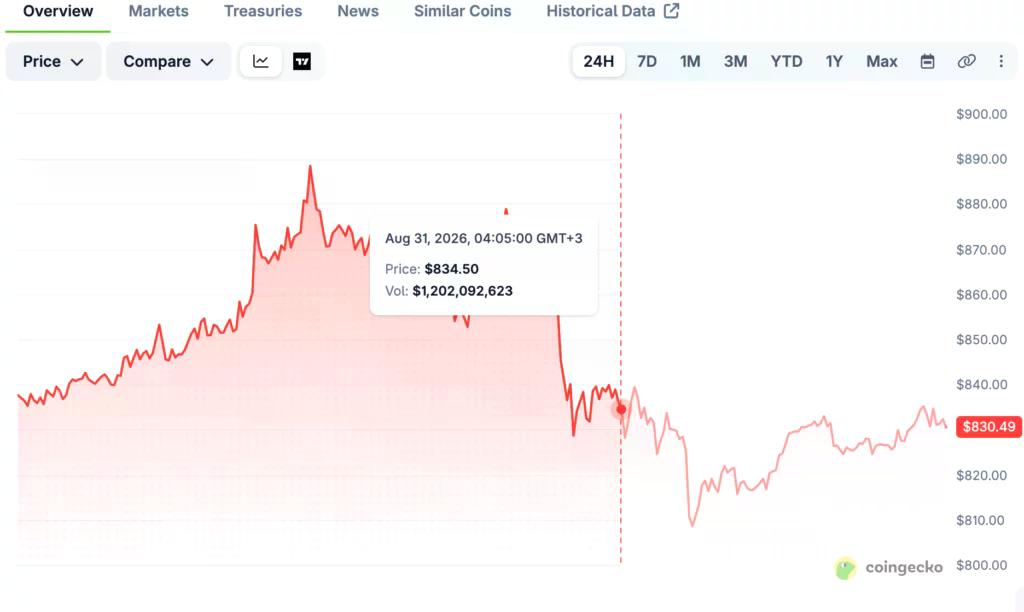
ZEC initially gained about 5% and traded near $839 following the Zakura announcement. The timing coincided with the release but does not establish that the software caused the move.
By Aug. 31, ZEC traded near $829, according to CoinGecko, after moving between approximately $808 and $888 over the previous 24 hours.
Zakura Common does not reduce Zcash block production or settlement times. Its work remains separate from the proposed NU7 network upgrade, which could reduce block times to approximately 25 seconds.
Zakura said its software can operate under the proposed timing. NU7 would still require its own governance process and network activation before the shorter interval becomes available.
