
Update (March 27, 2026, 10:52 am UTC: This article has been updated to include comments from Shawn Young, chief analyst at MEXC Research.
US spot Bitcoin exchange-traded funds (ETFs) logged $171 million in outflows on Thursday, their biggest day of redemptions since March 3, when they posted $348 million in outflows.
BlackRock’s iShares Bitcoin Trust ETF (IBIT) led the outflows with $41 million, Fidelity’s Wise Origin Bitcoin Fund (FBTC) followed with $32 million, the ARK 21Shares Bitcoin ETF (ARKB) sold $30.5 million, and Grayscale’s Bitcoin Trust ETF (GBTC) sold $24 million, according to data from Farside Investors.
The outflows follow a period of demand for Bitcoin ETFs, which attracted $1.36 billion in monthly inflows so far in March and are on track for their first month of net accumulation since October 2025, when ETFs clocked $3.42 billion in net inflows, according to Sosovalue data.
US-listed spot Bitcoin ETFs are a signal of institutional demand for Bitcoin (BTC), which fell below the $70,000 mark on Thursday. BTC fell 4.7% over the past week and traded at $67,780 at the time of writing, according to CoinMarketCap.
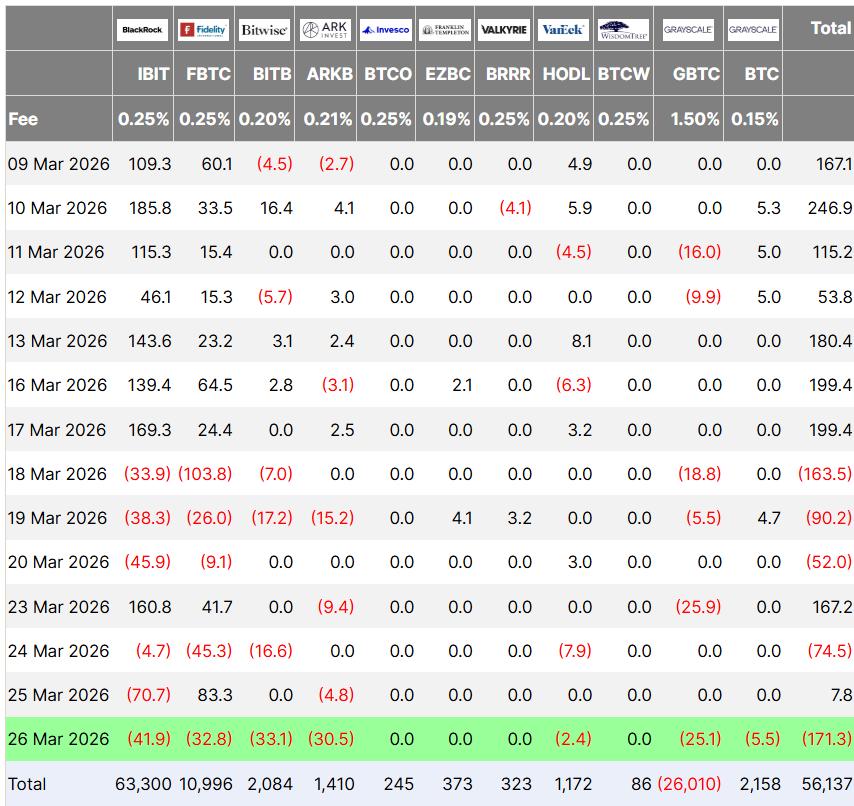
The $171 million in outflows signals that Bitcoin ETF investors are “beginning to pull back” and hedge against geopolitical escalations in the US-Israeli conflict with Iran, Shawn Young, chief analyst at MEXC Research, told Cointelegraph, but added that net ETF flows remained positive since the beginning of the conflict.
Still, Bitcoin ETFs are just “one good day away” from reversing their year-to-date outflows, said senior Bloomberg ETF analyst Eric Balchunas, who praised the ETFs for their “incredible fortitude” amid Bitcoin’s 46% correction from the $126,198 all-time high in October 2025.
“For context, when gold fell 40% in a short time frame about 10 years ago, it saw 1/3 of its investors bail,” said Balchunas in a Tuesday X post.
Related: Morgan Stanley files amended S-1 for MSBT Bitcoin ETF
The Bitcoin ETF sell-off follows reports that the US Department of Defense is sending thousands of soldiers to the Middle East, sources familiar with the matter told Reuters on Tuesday.
On Thursday, US President Donald Trump announced an extension to the ceasefire on Iranian energy infrastructure by 10 days to April 6, citing constructive ongoing negotiations.
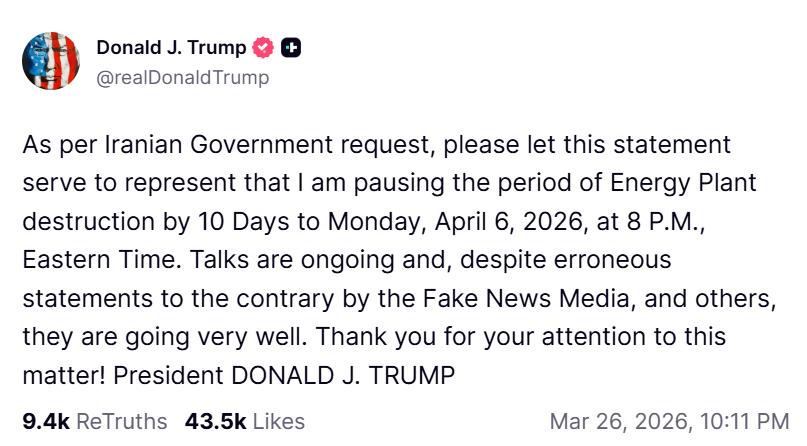
Despite the announcement by Trump, market participants remain worried about another unexpected weekend escalation, Kyle Rodda, senior financial analyst at Capital.com, told Cointelegraph. He said:
“Amidst the headline risk and he-said, she-said games about whether negotiations between the US and Iran are taking place, the US is moving assets and personnel towards the Middle East to prepare for what looks like a limited ground invasion.”
Investors are jittery about any potential escalation after being caught off guard by the initial US and Israeli strikes on Iran on Feb. 28, which occurred in the middle of constructive negotiations, Rodda added.
Magazine: Bitcoin’s ‘biggest bull catalyst’ would be Saylor’s liquidation — Santiment founder





 BTC
BTC