


Why Precious Metals Are Making Headlines Again in 2026?
Gold has been a store of value for over 5,000 years. Empires have risen and fallen, currencies have come and gone, but gold has remained a constant measure of wealth. In 2026, this ancient asset reminded the world why it still matters. Prices surged 55% in the past year, and gold crossed $5,000 per ounce for the first time in history.
The precious metals market in 2026 is not just about physical bullion anymore. It now includes exchange-traded derivatives, futures contracts on platforms like LBank Metal Futures, and blockchain-based tokens that represent real gold stored in vaults. This ecosystem has become a sophisticated financial complex that connects traditional finance with emerging digital assets.
Trade tensions, U.S. dollar uncertainty, and central bank diversification have combined to create what many analysts call a "perfect storm" for precious metals. Many platforms forecast gold could average over $5,750 per ounce by the end of 2026, with potential upside toward $6,000 by 2027. For investors and traders, understanding this market has become essential.
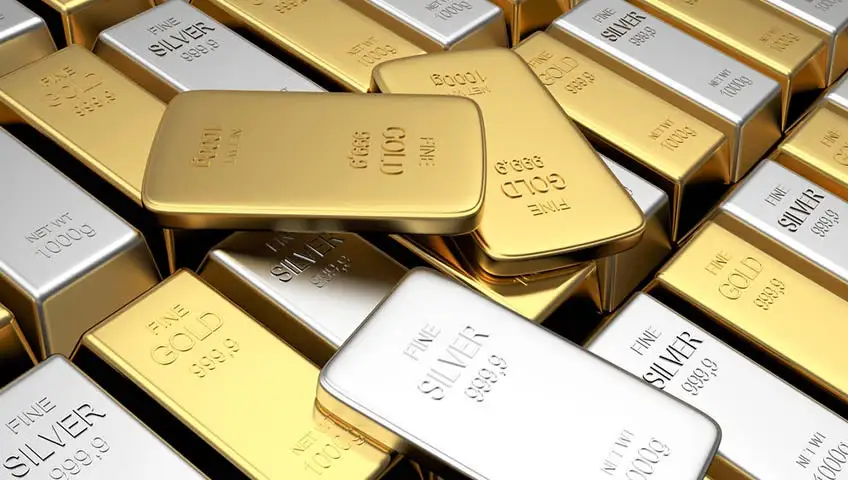
Gold and silver bars, Image source: Ravital/shutterstock.com
What Happened to Gold and Silver in 2026?
The year 2026 marked a historic escalation for precious metals. What began as a late-2025 breakout evolved into full-scale price discovery, as extreme volatility, leveraged positioning, and macro uncertainty pushed metals into territory few analysts had seriously modeled.
Gold Price Breaks $5,000 for the First Time
Gold prices accelerated sharply in early 2026, extending the prior year’s momentum and moving decisively into uncharted territory. By late January, spot gold rallied beyond $5,000 per ounce, reaching a record high near $5,595 before experiencing sharp intraday reversals.
This rapid appreciation reflected intensifying concerns over U.S. fiscal stability, persistent geopolitical risk, and continued central bank demand. Unlike prior cycles, pullbacks in 2026 were driven less by improving macro conditions and more by leverage unwinds and exchange margin hikes, underscoring how elevated participation and volatility had become defining features of the market.
Silver Price Reaches All-Time Highs
Silver followed gold’s trajectory in 2026, but with even more dramatic swings. The metal surged to a record high above $120 per ounce in late January, more than doubling its levels from the prior year, before suffering one of the sharpest short-term corrections in modern silver market history.
Silver’s dual role as both a precious metal and an industrial input amplified its sensitivity to liquidity conditions and speculative flows. In 2026, silver traded less like a traditional commodity and more like a leveraged macro asset, magnifying both rallies and drawdowns as positioning became increasingly crowded.
Copper and Industrial Metals Rally
Copper prices remained elevated in 2026, holding above $5 per pound after earlier spikes near $5.30 driven by tariff rhetoric, supply constraints, and expectations for infrastructure and electrification spending. Analysts raised long-term price forecasts as demand tied to electric vehicles, power grids, and renewable energy continued to strengthen.
Copper’s performance reinforced a broader theme across metals in 2026: policy headlines and supply risks were capable of triggering large price moves even without clear changes in underlying consumption.
Micro Contracts See Record Trading Volume
As volatility intensified in 2026, market participants increasingly turned to smaller contract sizes to manage risk. Following record volumes set in late 2025, Micro Gold (MGC) futures continued to trade at historically high activity levels, reflecting sustained participation from retail traders and smaller institutions.
The growth of micro contracts highlighted a structural shift in metals markets. Price discovery in 2026 was no longer dominated solely by large institutions. Broader access, higher leverage sensitivity, and rapid positioning changes played a central role in shaping price action throughout the year.
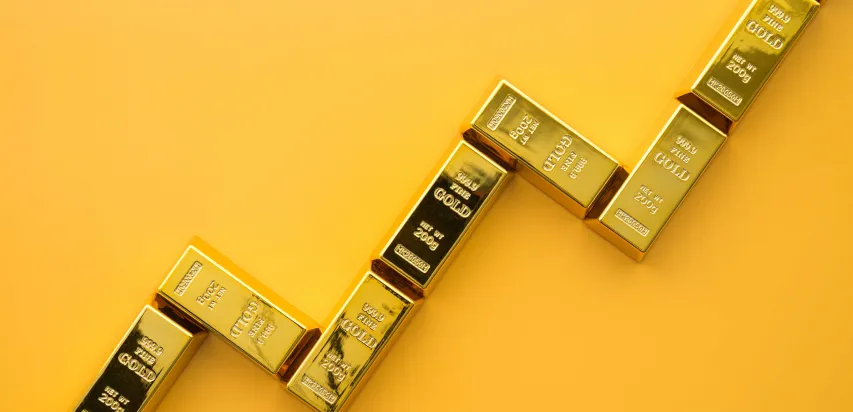
Gold bars, image source: JPM
The History of Gold: From Ancient Currency to Modern Safe Haven
Gold's role in human civilization stretches back to the earliest recorded history. Understanding this context helps explain why gold continues to hold such power over global markets today.
Ancient Origins and the First Gold Coins
The earliest recorded use of gold dates back to around 3000 BC in Sumeria and Egypt. Ancient civilizations recognized gold's unique properties: it does not corrode, it is easy to shape, and its beauty made it ideal for representing status and wealth. Gold became the preferred material for royal treasures and religious artifacts across cultures.
The first standardized gold coins were minted by Lydian King Croesus around 600 BC in what is now modern Turkey. This innovation transformed gold from a decorative material into a practical medium of exchange. The concept spread quickly across the ancient world, and gold coins became the foundation of international trade for centuries.
The Gold Standard Era and Its End
For most of modern history, major economies tied their currencies directly to gold. This system, known as the gold standard, provided stability by limiting how much money governments could print. If you held paper currency, you could theoretically exchange it for a fixed amount of gold.
The United States officially abandoned the gold standard in 1971 when President Nixon ended the Bretton Woods system. Before this decision, gold was fixed at $35 per ounce. The move to floating exchange rates freed governments to print money without gold backing, but it also removed the automatic check on inflation. Since then, gold has traded freely on global markets, and its price has reflected investor sentiment about economic stability and currency strength.
How Gold Is Measured
Precious metals are measured in troy ounces rather than standard ounces. One troy ounce equals 31.1035 grams, which is slightly heavier than a regular ounce (28.35 grams). This measurement system dates back to the medieval period and remains the global standard for trading gold, silver, platinum, and palladium.
Key People and Organizations Shaping the Gold Market
The precious metals market is influenced by major financial institutions, central banks, and prominent analysts whose forecasts move billions of dollars in capital.
J.P. Morgan's Commodities Team
J.P. Morgan has emerged as one of the most influential voices in precious metals analysis. Two key figures lead their outlook:
- Natasha Kaneva: Head of Global Commodities Strategy at J.P. Morgan, she spearheads the bullish outlook for gold prices and provides macroeconomic context for precious metals demand
- Gregory Shearer: Head of Base and Precious Metals Strategy, he delivers technical analysis of central bank demand patterns and tracks investor inflows into gold markets
Their December 2025 forecast predicting $5,000 gold by 2026 captured significant attention and influenced institutional positioning.
Major Market Organizations
| Organization | Role |
| CME Group (COMEX/NYMEX) | Leading marketplace for precious metals futures and options contracts |
| U.S. Federal Reserve | Monetary policy decisions directly impact gold prices through interest rates and dollar strength |
| International Monetary Fund (IMF) | Tracks global reserve compositions and monitors central bank gold holdings |
| London Bullion Market Association (LBMA) | Sets standards for physical gold trading and oversees London's vaulting arrangements |
Central banks have become particularly important market participants. Their decisions to diversify away from U.S. dollar reserves have created consistent demand that supports prices even during periods of market volatility.
Tether Gold (XAUt): How Blockchain Meets Bullion
The precious metals market has expanded into the blockchain sphere through tokens that represent physical gold ownership. Tether Gold (XAUt) has emerged as a leading example of this convergence between traditional commodities and digital assets.
How XAUt Works
Each XAUt token represents ownership of one troy fine ounce of gold stored on a physical London gold bar. The gold backing these tokens is held in secure vaults and is subject to regular audits. This structure allows investors to gain exposure to gold prices without the logistics of storing and insuring physical bullion.
The token combines several advantages:
- Physical Backing: Each token corresponds to real gold in London vaults
- Blockchain Liquidity: Tokens can be traded 24/7 on cryptocurrency exchanges
- Fractional Ownership: Investors can buy portions of an ounce rather than full bars
- Portability: Holdings can be transferred globally without physical shipping
XAUt Price Performance in 2026
As of early February 2026, XAUt trades between 4,800 and 4,900 USDT, closely tracking the spot gold price. The token reached a high of 5,609.9 USDT on January 29, 2026, reflecting the peak in underlying gold prices.
While XAUt saw a brief 24-hour decline of up to 2% during the February correction, it maintained a 10%+ increase over the monthly period. This performance demonstrated that tokenized gold can serve as a "debasement hedge" against fiat volatility while providing the accessibility of digital assets.
Why Crypto Traders Care About Gold
For cryptocurrency traders, gold-backed tokens offer portfolio diversification without leaving the blockchain ecosystem. During periods of crypto market volatility, assets like XAUt can provide stability because gold prices often move independently of Bitcoin and other cryptocurrencies. This makes tokenized gold useful for risk management strategies within crypto portfolios.
Gold Price Forecast: What Experts Predict for 2026 and 2027
Analysts remain bullish on precious metals despite recent volatility. The major forecasts suggest significant upside potential, though they also acknowledge risks.
J.P. Morgan's Base Case
J.P. Morgan Global Research released a major forecast in December 2025 that captured market attention. Their projections show continued price appreciation:
- Q4 2026: $5,055/oz average
- End of 2027: $5,400/oz potential
These targets represent further upside of 5-15% from current levels near $4,800-5,000 per ounce. The forecast is based on continued central bank buying, persistent inflation concerns, and geopolitical uncertainty.
The Bullish Scenario
Analysts have outlined scenarios where gold could exceed even the base case projections. If just 0.5% of foreign U.S. asset holdings were diversified into gold, prices could reach $6,000 per ounce. This scenario is not the base case, but it illustrates the potential magnitude of capital that could flow into gold if dollar sentiment deteriorates further.
The Gold-Silver Ratio
The gold-silver ratio (GSR) measures how many ounces of silver one ounce of gold can buy. In early 2026, this ratio remained volatile and elevated. A ratio above 80 historically suggests that gold is overvalued relative to silver, which could indicate that silver has more upside potential if precious metals continue their bull run.
Traders watch the GSR for signals about relative value. When the ratio is high, some investors rotate from gold into silver expecting the ratio to normalize. When it is low, they may prefer gold's relative stability.
Precious Metals: Risks and Market Corrections
Despite the bullish outlook, the precious metals market faces significant risks that investors should understand.
The February 2026 Correction
In early February 2026, precious metals experienced a sharp correction that tested investor conviction. Gold fell nearly 10% from its recent peaks, dropping from above $5,000 to stabilize in the $4,800-5,050 range. Silver's correction was even more severe, with prices plunging 13% from recent highs.
This volatility reminded investors that even bull markets include painful drawdowns. The correction was attributed to profit-taking after the rapid 2025 gains and temporary dollar strength.
Silver's Speculative Element
Silver's sharper correction reflected its more speculative nature. Analysts noted "meme stock" behavior among retail speculators who had piled into silver during the late 2025 rally. Tighter liquidity in the London physical market amplified price swings when sentiment shifted.
Silver's smaller market size compared to gold makes it more susceptible to speculative flows. This volatility can create opportunities for traders but also poses risks for those unprepared for sharp moves.
Geopolitical Factors
Ongoing conflicts in the Middle East and Ukraine continue to drive safe-haven demand for gold. However, any easing of these tensions could reduce the fear premium built into current prices. A peace agreement or de-escalation could trigger selling pressure as investors reduce their hedging positions.
Similarly, if inflation comes under control faster than expected or if the Federal Reserve maintains higher interest rates, gold could face headwinds. Higher real interest rates increase the opportunity cost of holding gold, which pays no yield.
Timeline: Key Events in Precious Metals History
The precious metals market has evolved over thousands of years. This timeline highlights the most significant events leading to the current market environment.
What the Gold Rally Means for Investors Going Forward
The precious metals market in 2026 represents a convergence of ancient value and modern technology. Gold continues to serve its historical role as a store of value and hedge against uncertainty. At the same time, innovations like Tether Gold (XAUt) are making this ancient asset accessible to a new generation of digital-native investors.
The fundamental drivers behind the current bull market remain intact. Central banks continue diversifying away from dollar reserves. Supply constraints limit how quickly mine production can respond to higher prices. Geopolitical tensions show no signs of permanent resolution. These factors suggest that the structural bid for gold will persist even if short-term corrections occur.
For cryptocurrency traders, gold-backed tokens offer a bridge between traditional safe-haven assets and the blockchain ecosystem. These instruments can serve as portfolio stabilizers during periods of crypto volatility while maintaining the flexibility and accessibility of digital assets.
The J.P. Morgan forecast of $5,055 per ounce by Q4 2026 may prove conservative if dollar weakness accelerates or if new geopolitical shocks emerge. Alternatively, the market could consolidate at current levels if inflation subsides and real interest rates rise. Either way, precious metals have reclaimed their position at the center of global investment conversations, and understanding this market has become essential for serious investors navigating an uncertain world.