Food Token (FOOD)

How to Buy Food Token (FOOD) on LBank

Learn how to buy Food Token (FOOD) on LBank, including payment methods such as credit cards, debit cards, Apple Pay, and bank transfers, as well as the purchase process, preparations, and FAQs.

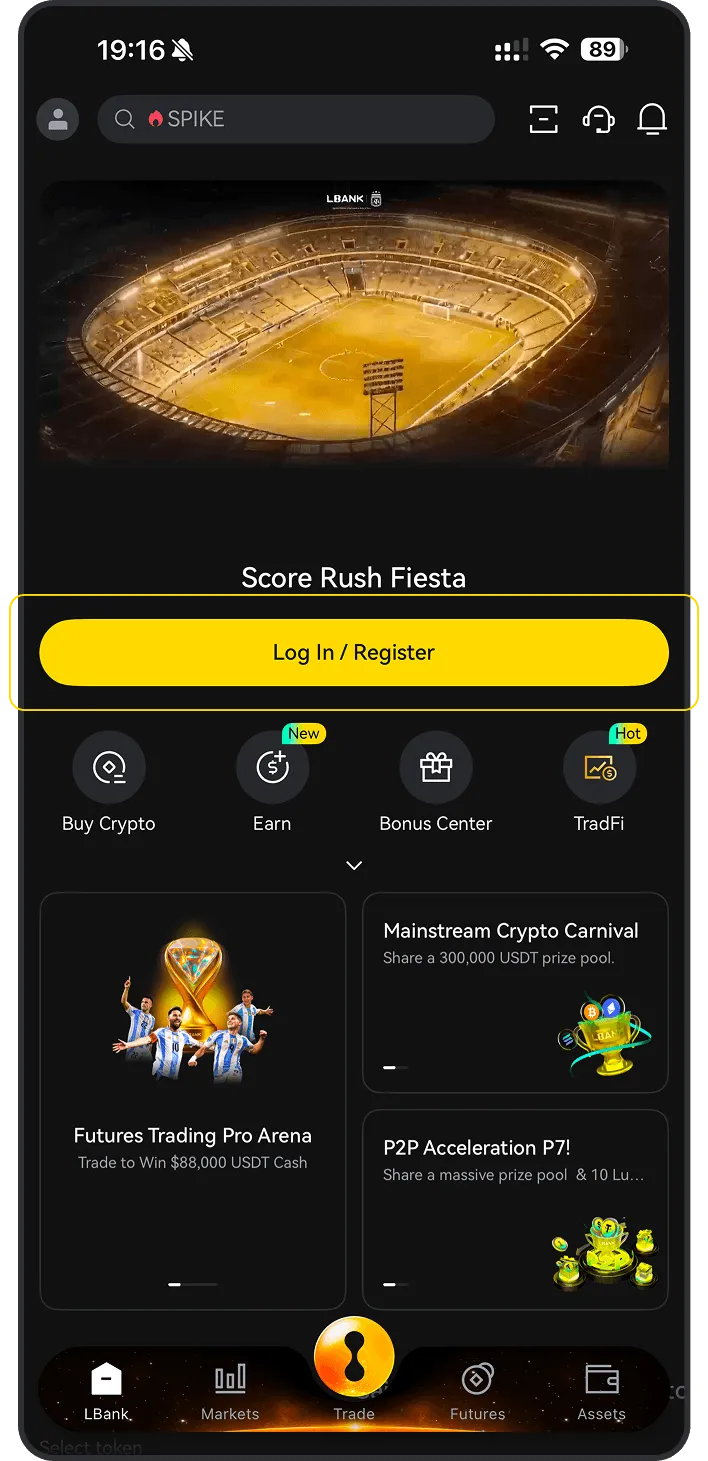
Step 1
Download the LBank App
Please download the LBank App and register to get started
Step 2
Fund your account
Deposit using your preferred payment method.
Step 3
Choose your cryptocurrency
Select the crypto you want to buy from over 3,000,000 cryptocurrencies available on LBank Exchange or Wallet.

Purchase Decision Overview

Credit / Debit Card

Credit / Debit Card

Fee
Variable Fees
Processing Time
Usually within 1 minute, up to 48 hours
Minimum Purchase Amount
Starting from approx. 10–15 USD
Supported Regions
Subject to region, fiat currency, issuing bank, and payment channel support
Bank Transfer / Local Transfer

Bank Transfer / Local Transfer

Fee
Variable Fees
Processing Time
Depends on the payment method; some local channels may be faster
Minimum Purchase Amount
Starting from approx. 1–10 USD
Supported Regions
Subject to local payment channel support

Three Simple Steps to Buy FOOD on LBank

Register an LBank account

How to Buy FOOD on LBank: Payment Methods Overview

Explore the available payment methods for buying FOOD on LBank, including credit card, debit card, bank transfer, Apple Pay, Google Pay, PayPal, and P2P, to quickly choose the most suitable way to buy FOOD.

Credit / Debit Card
Credit / Debit Card
Processing Time: Usually within 1 minute; up to 48 hours
Use a Visa/Mastercard that supports international online transactions and ensure 3D Secure is enabled; if it fails, try a different card or try again later
Common Reasons for Failure: The issuing bank declined the cryptocurrency transaction; insufficient balance; 3D Secure verification failed; risk control interception; or region/card network not supported
Bank Transfer / Local Transfer
Processing Time: Instant or 1–3 Business Days
Verify the receiving account, reference code, and transfer network, and use a bank account consistent with your identity verification
Common Reasons for Failure: Incorrect receiving information or reference code; name mismatch; bank processing delay; or unsupported transfer network

What Do You Need to Prepare Before Buying Food Token (FOOD) on LBank?

Check the preparations required before buying Food Token (FOOD) on LBank, including account registration, identity verification (KYC), payment methods, regional availability, and pre-purchase precautions to help you smoothly complete the BTC purchase process.

Suitable for
Users who want to quickly buy FOOD with fiat
Before You Buy: Checklist
Register and log in to your account
Complete required KYC
Prepare payment method
Confirm regional availability,Check limits / fees / processing time
User Path
Buy Crypto

How to Buy Food Token on LBank – Step-by-Step Guide

Before you begin, decide how you’d like to pay:

Pay with fiat

If you're new to crypto, using fiat currency (such as USD, EUR, etc.) is the easiest way to buy Food Token. LBank supports various payment methods, including debit cards, credit cards, bank transfers, and other local payment options where available. You may need to fund your LBank account before making a purchase.

Pay with other cryptocurrencies

If you already hold other cryptocurrencies, you can trade them for Food Token on LBank. Please make sure that LBank supports the trading pair you need (e.g., Bitcoin (BTC)). LBank offers a wide range of trading pairs, allowing you to conveniently convert your existing crypto into Food Token.

LBank supports multiple payment methods

You can use the following payment methods to purchase Food Token on LBank:

Debit card
Credit / Debit Card
PayPal
Apple Pay
Google Pay

Mobile app guide

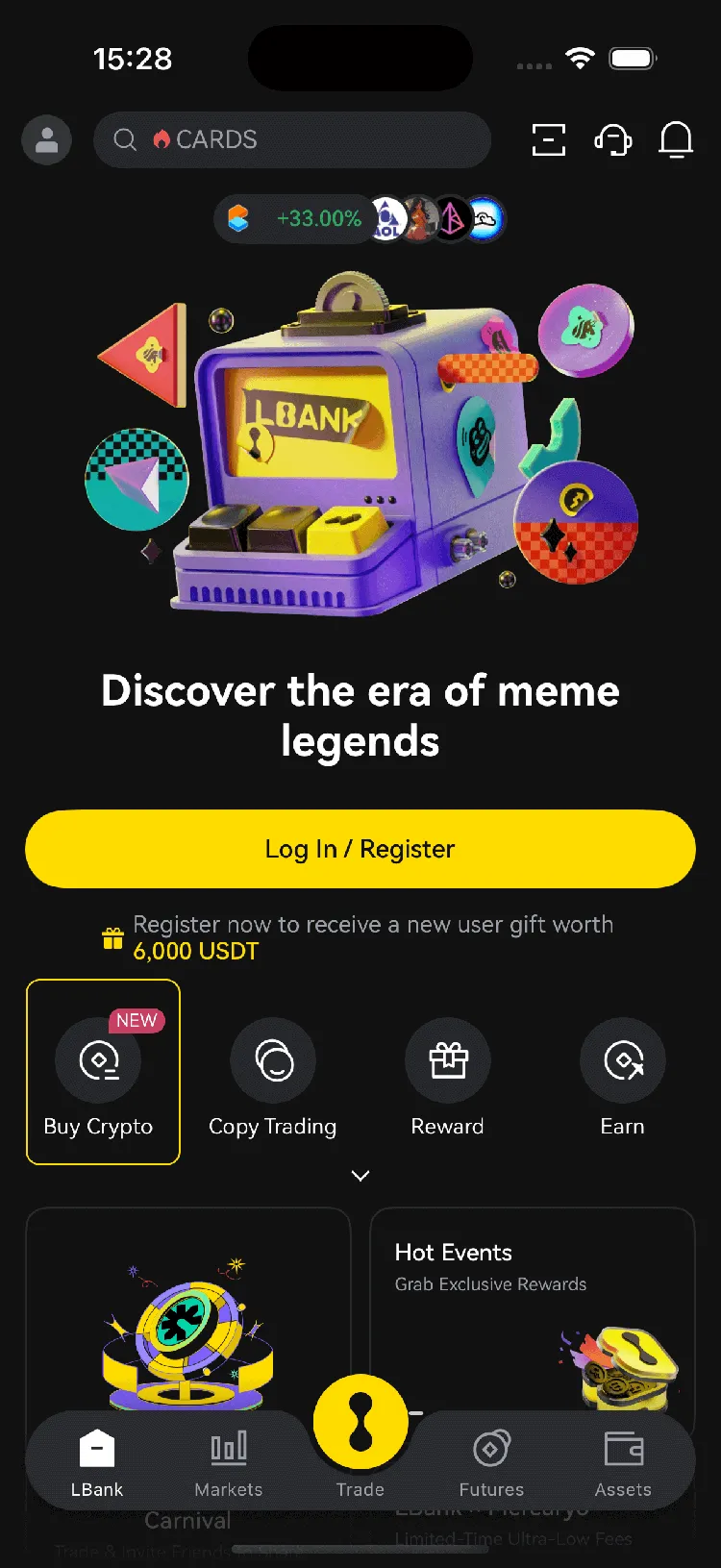
1
Open the LBank mobile app and tap “Buy Crypto”
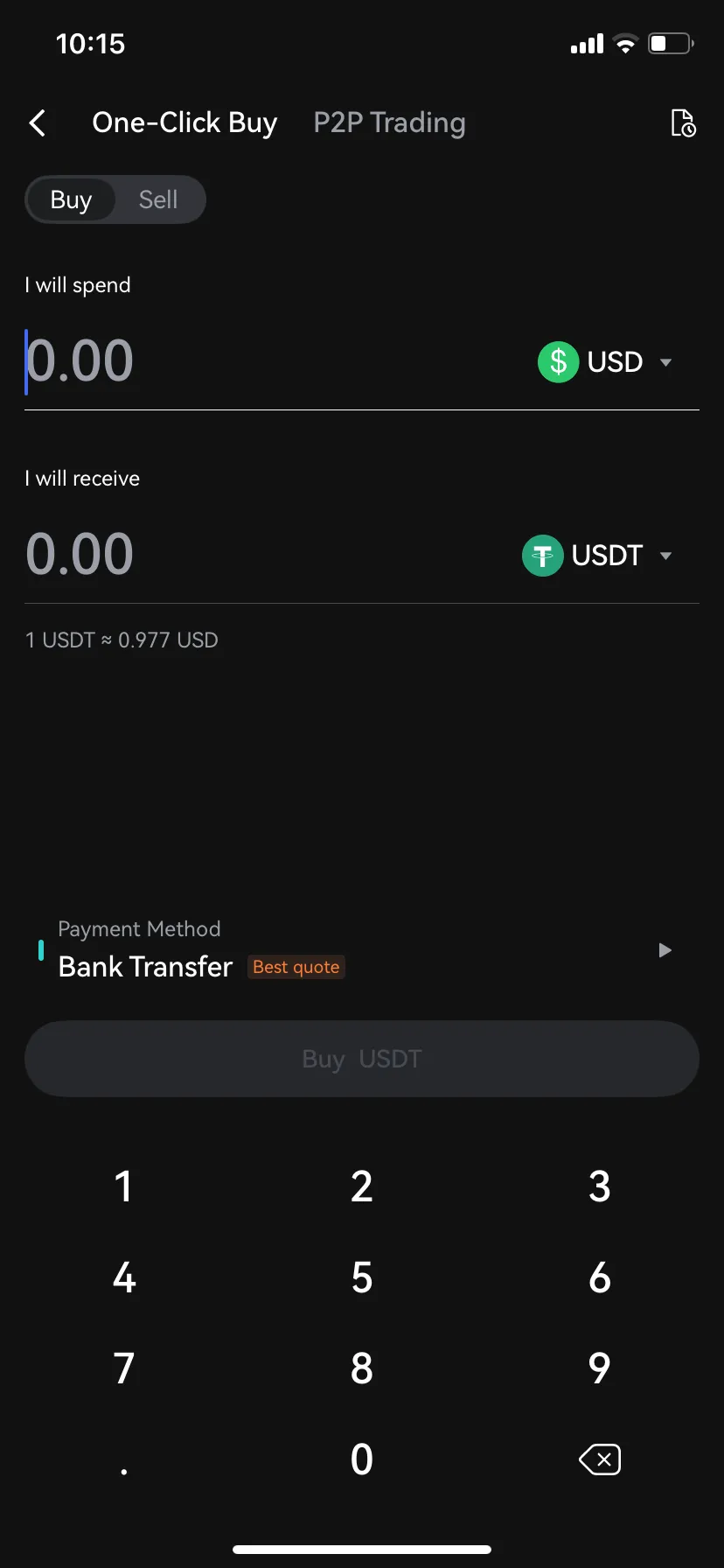
2
Select “Buy”
3
Choose , enter the fiat currency you want to use, input the amount, then tap “Buy” or “Confirm”

Desktop guide

1
Log in to LBank on your desktop browser and click the “One-Click Buy” option.
2
Under the “One-Click Buy” tab:

(a). Choose the fiat currency you want to use

(b). Select the Food Token you want to purchase

(c). Enter an amount or use quick-select options (e.g., 100, 200, 500, max)
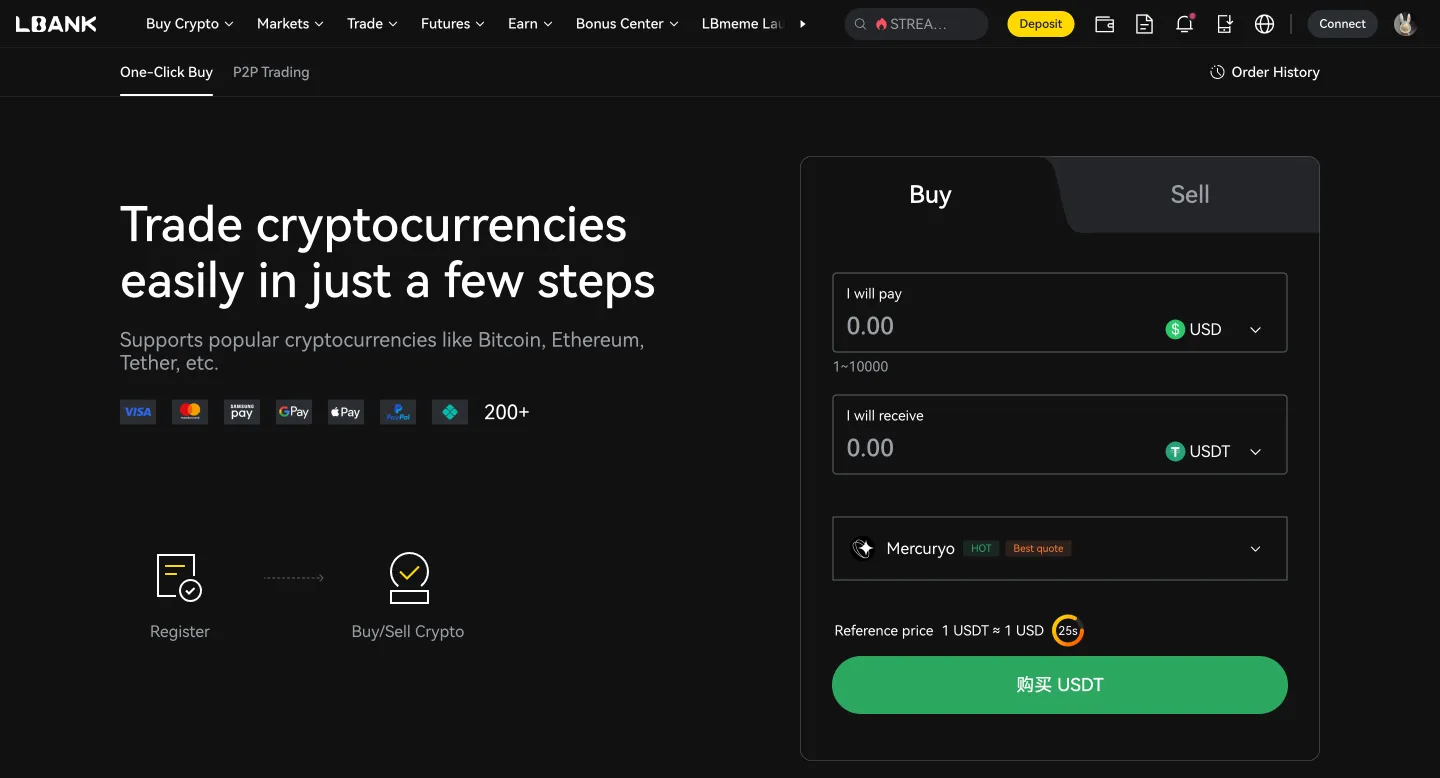
(d). Choose your payment method
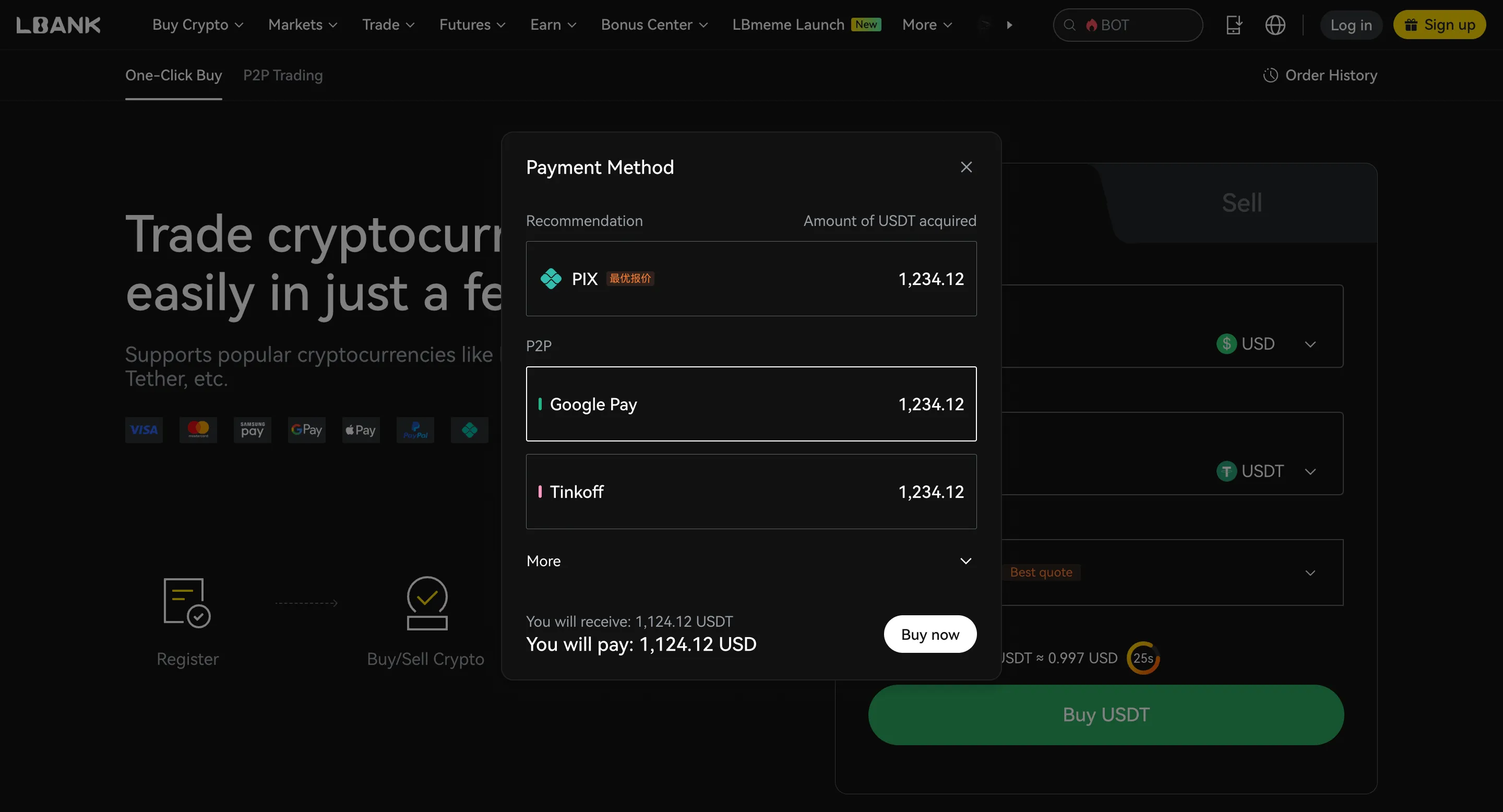
(e). Click “Confirm” or “Buy now”
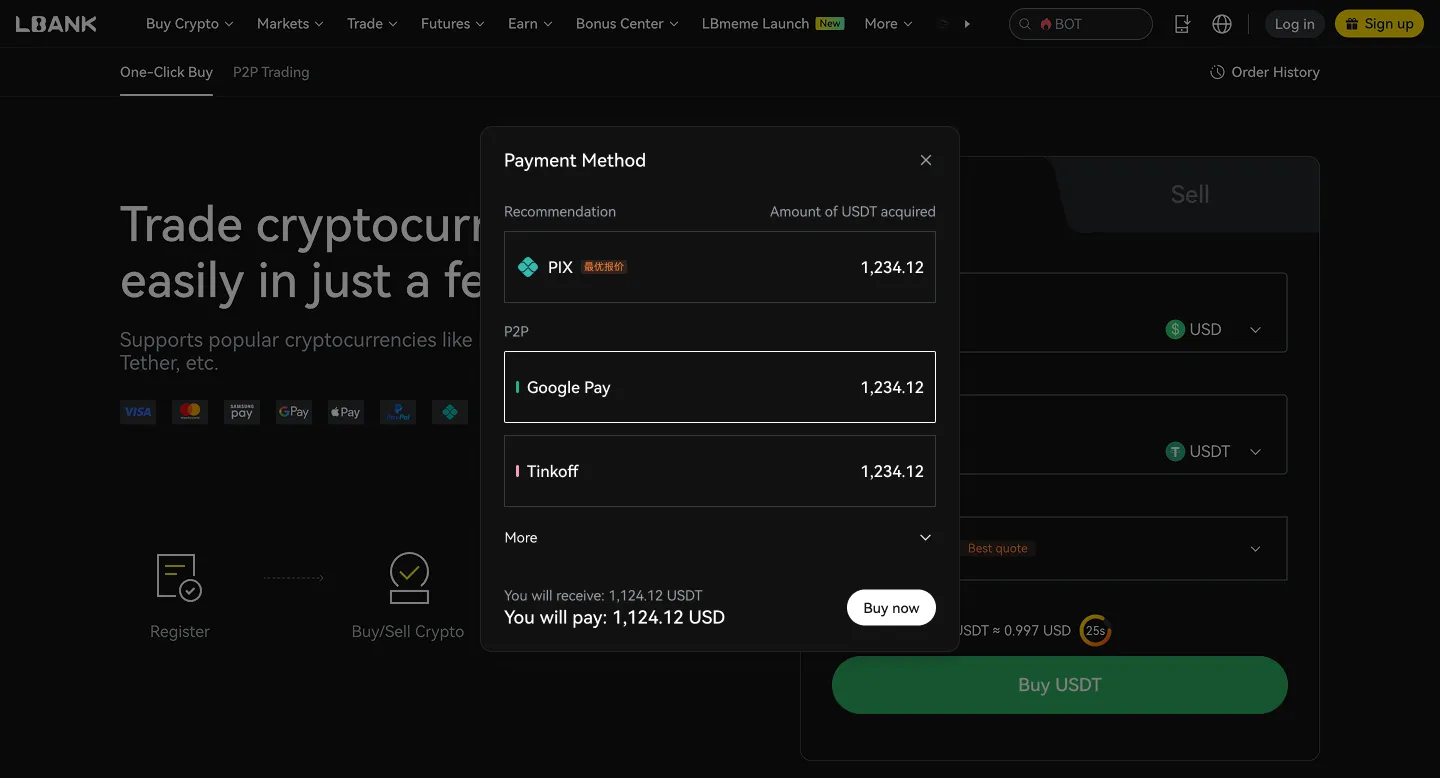
P2P Trading

Merchant
Price
Amount | Limit
Payment Method
Action
LO
Loyalty_Trader
317 min | 100%
0.954 USD
2231.24 USDT
500.000 - 2128.602USD
Bank Transfer
YY
YYDS_Trader
702 min | 100%
0.954 USD
4284.44 USDT
500.000 - 4000.000USD
Bank Transfer
AM
AMG_Trading
661 min | 100%
0.954 USD
8790.36 USDT
200.000 - 8386.003USD
Bank Transfer

What is Food Token (FOOD)?

There are several distinct crypto/Web3 projects and concepts that use the name 'Food Token' or 'FOOD' for their token. One project, known as The Food Token Project, operates on the LUNC blockchain and is designed to tackle global food security issues. It also promotes sustainable agricultural practices and environmental conservation through its "Terra Farming Initiative". This project allocates a portion of its transactions to support permaculture farms in various regions, emphasizing ecological harmony and biodiversity. Future plans include a "Terra Farming Game" and Non-Fungible Tokens (NFTs) to offer immersive learning and community building. Another project, also referred to as Food Token, functions as a stablecoin aimed at facilitating everyday spending. This stablecoin can be acquired at a certain value and then redeemed for a higher value at participating restaurants within its network. The mission behind this initiative is to simplify cryptocurrency spending for users and streamline crypto acceptance for restaurants by leveraging gift cards. Its roadmap includes developing a beta website, establishing partnerships with restaurants, and conducting testing. A different project, the Food Bank startup, issued a Food token on the Binance Smart Chain (BEP20). This altcoin's protocol is designed to provide auto-rewards to holders while simultaneously funding local Foodbanks through a transaction tax, with a portion specifically allocated to charity. Additionally, there is the FoodCoin Ecosystem, built on Ethereum technology. This project aims to create a global marketplace for food and agricultural products, initially integrating with the 1000 EcoFarms platform. It utilizes smart contracts to streamline transactions by reducing the number of intermediaries, thereby potentially lowering costs for consumers. FoodCoin (FOOD) serves as the currency for buying and selling goods within this ecosystem. Lastly, FoodToken.io is presented as an all-in-one platform for food vendors. Its primary focus is to enhance food safety and transparency across the food supply chain. It achieves this by tracking product origins and farming practices, which allows for quick identification of sources in case of foodborne illnesses and helps consumers make informed decisions about their food. Learn more

Is Food Token (FOOD) a good investment?

Whether Food Token (FOOD) is a good investment depends on your personal financial situation and risk tolerance. Cryptocurrency investments are speculative and can be highly volatile.


Before investing in Food Token (FOOD) or any cryptocurrency, consider the following:

Your financial goals
Are you seeking short-term gains or long-term growth?
Your risk tolerance
Your risk tolerance
How much potential loss are you comfortable with?
Diversification
Diversification
Don’t put all your eggs in one basket. Spread your investments across different types of assets.
Your goals and time horizon
Cryptocurrencies are best suited for long-term investors. Disclaimer: This is not financial advice. Please do thorough research before making any investment decisions.

Fees, limits, and processing time for buying FOOD on LBank

Compare fees, transaction limits, and estimated processing times across different payment methods. Actual fees and availability may vary by region, fiat currency, payment method, and third-party providers. Please refer to the order page for final details.


ROI calculator

If I invest, how much profit will I make?
Invest
$
Enter
FOOD
Date
2026-06-05
You will earn $-- in profit, with an ROI of --

What can you do with Food Token (FOOD)?

Investment
Buy and hold Food Token (FOOD), expecting its value to increase over time.
Investment
Trade
Actively trade Food Token (FOOD) on LBank to profit from price fluctuations.
Trade
Pay
Use Food Token (FOOD) to pay for goods and services where accepted.
Pay

Why is LBank the best platform to buy Food Token (FOOD)?

User-friendly interface
LBank offers a simple and intuitive platform for buying and selling Food Token (FOOD).
Competitive fees
Competitive fees
LBank provides competitive trading fees for Food Token (FOOD).
Secure platform
Secure platform
LBank applies robust security measures to protect your funds.
Diverse trading pairs
LBank offers a wide range of trading pairs for Food Token (FOOD).
24/7 customer support
LBank provides customer support to help you with any questions or issues.
Mobile app
Mobile app
Trade Food Token (FOOD) anytime, anywhere using the LBank mobile app.
High liquidity
High liquidity
LBank offers excellent liquidity for Food Token (FOOD) trading, ensuring you can easily buy and sell your crypto assets.
Regulatory compliance
LBank complies with all regulatory requirements in the jurisdictions where it operates to ensure a compliant and secure trading environment

After buying FOOD, what is the best way to store it?

After buying FOOD, you can choose a storage method based on your usage frequency, holding period, and security needs. If you need to trade at any time, you can store it in your LBank account. If you prioritize self-custody or long-term security, consider using a personal wallet or a hardware wallet.

Store in your LBank account

Store in your LBank account

Suitable for
Users who want to trade or convert at any time
Short-term BTC holders
Features
Ready to use immediately after purchase; easier to use
Ideal for frequent trading, conversions, or using platform features
Security Alert
Please enable 2FA
Please set an anti-phishing code
Only log in through official channels
Transfer to a personal hot wallet

Transfer to a personal hot wallet

Suitable for
Users who want to manage their own assets
Users who need daily transfers or on-chain usage
Features
More flexible; convenient for daily transfers and management
Better suited for small holdings and everyday use
Security Alert
Do not store seed phrases or private keys in the cloud
Do not save sensitive information via chat tools, email, or screenshots
Stay alert for phishing websites and fake wallet apps
Transfer to a hardware wallet

Transfer to a hardware wallet

Suitable for
Long-term BTC holders
High-value holders who prioritize security
Features
Private keys are stored offline, offering enhanced security
Ideal for long-term storage of infrequently moved assets
Security Alert
Securely back up seed phrases offline
Never disclose your recovery phrase to anyone
Assets may be irrecoverable if the seed phrase is lost

Food Token (FOOD) FAQ

A 'Food Token' project typically addresses issues within the food sector. This could range from creating a stable, discounted payment method for restaurants, to enabling transparent fundraising for food banks, or enhancing food supply chain traceability. Blockchain's immutability and transparency are beneficial for verifying gift card redemptions, ensuring integrity of donation funds, or establishing clear ownership records in supply chains, making it a fitting solution where trust and verifiable transactions are paramount.
The tokenomics for 'Food Token' would outline its utility and economic model. This might include a total supply, distribution plan (e.g., allocations for team, community, and operations), and vesting schedules. Depending on its purpose, the token could be backed by real-world assets like gift cards for a stablecoin model, or incorporate a transaction tax to fund charitable causes. Mechanisms such as staking for rewards or token burning could also be employed to manage supply and incentivize long-term participation.
The team's credibility is vital. For a 'Food Token' project, the ideal team would possess a blend of expertise in blockchain development, cybersecurity, and the specific domain it targets, such as the restaurant industry, supply chain logistics, or non-profit management. Investors and users seek transparent profiles, verifiable professional backgrounds, and a proven track record to ensure the team has the necessary skills and experience to execute the project's vision and navigate challenges effectively.
Security is paramount for any 'Food Token.' This involves conducting rigorous smart contract audits by independent, reputable firms to identify and mitigate vulnerabilities. Other critical measures include implementing secure coding practices, utilizing multi-signature wallets for treasury management, encrypting sensitive data, and establishing robust protocols for incident response. Continuous monitoring and a focus on data privacy are also essential to protect both project assets and user information from potential threats.
The roadmap for 'Food Token' should clearly articulate its strategic milestones and development timeline. This might include phases for platform development, partnerships (e.g., with restaurants or food banks), feature rollouts, and community growth initiatives. A transparent, regularly updated roadmap allows the community to track progress and understand the project's future direction. Demonstrating a Proof of Concept (POC) or having existing functional products signifies tangible progress and increases confidence in the project's execution capabilities.
For 'Food Token,' addressing scalability means ensuring the network can efficiently process a growing number of transactions, whether for restaurant redemptions or charity contributions, without bottlenecks. This might involve utilizing high-throughput blockchain networks or Layer 2 scaling solutions. Interoperability focuses on the token's ability to seamlessly interact and transact across different blockchain ecosystems, enhancing its utility and reach. Cross-chain compatibility could enable broader adoption and integration within the wider Web3 landscape, facilitating smoother user experiences.

How to buy other crypto assets