The Spanish Red Cross just solved a problem that's been bugging humanitarian organizations for years: how do you prove aid actually reached people without turning vulnerable beneficiaries into public data points? Their answer is RedChain, a blockchain system that gives donors transparency while keeping recipients completely anonymous.
How RedChain Actually Works
The Spanish Red Cross (Creu Roja) built this with Barcelona-based BLOOCK and zero-knowledge firm Billions Network. According to a release shared with Cointelegraph, the platform handles everything "from donation to disbursement."
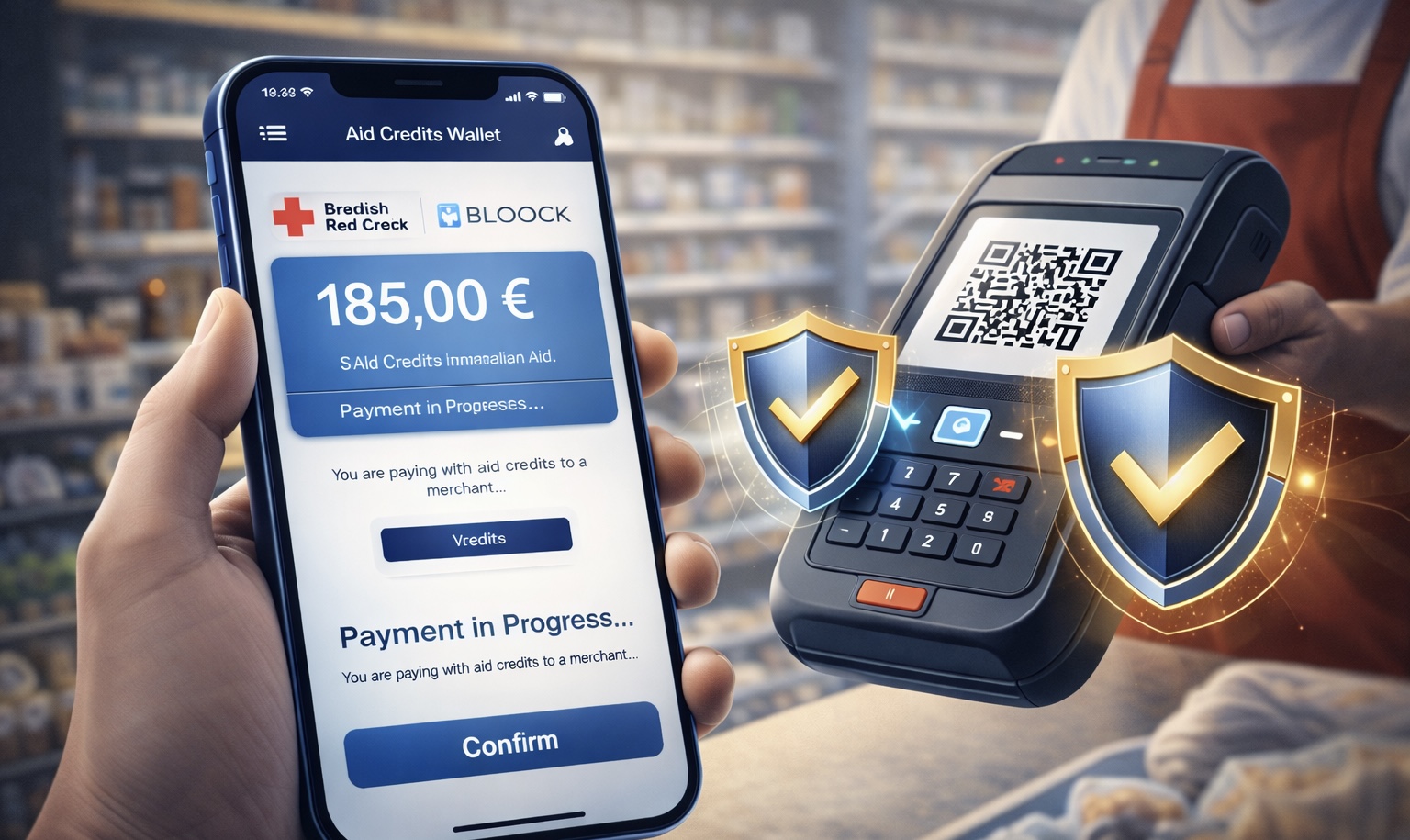
Instead of paper vouchers or prepaid cards, people get ERC-20 aid credits on the Ethereum blockchain. These go into a mobile wallet, and beneficiaries spend them at participating merchants by scanning QR codes. Simple enough.
Here's the smart part: all the sensitive stuff—names, addresses, case files—never touches the blockchain. That data stays locked in Creu Roja's own systems. The public blockchain only sees hashes, timestamps, and transaction proofs. You can verify aid was distributed without knowing who received it.
Why This Privacy Thing Matters
Traditional aid distribution has always faced this tension. Donors want proof their money reached real people. But beneficiaries—refugees, abuse survivors, people fleeing violence—need anonymity to stay safe.
Paper systems gave you privacy but zero accountability. Digital systems usually flip that: great tracking, terrible privacy. RedChain tries to give you both.
Donors get cryptographic proof aid was distributed. Merchants verify the credits are legit. Beneficiaries stay anonymous on a ledger anyone can inspect. Everyone gets what they need.
The Tech Behind It
RedChain uses Ethereum's ERC-20 standard for the credits. But unlike most blockchain apps that treat transparency as a feature, this one deliberately keeps personal data off the chain.
Zero-knowledge proofs handle the verification—you can prove something's true without revealing the details. So the blockchain confirms "yes, this credit is valid and hasn't been spent twice" without broadcasting who used it or where.
BLOOCK anchors the transaction data to the blockchain. Billions Network provides the zero-knowledge tech that makes privacy-preserving verification possible.
What This Means in Practice
Blockchain's been pitched for humanitarian aid forever, but most projects either stayed in pilot mode or sacrificed privacy for transparency. RedChain is actually live and being used by a major humanitarian organization.
For beneficiaries, it feels like any payment app—scan, pay, done. No need to understand how blockchains work.
Merchants get instant verification that credits are real and redeemable. No more sketchy paper vouchers or card authorizations that fail at the worst moment.
Donors and auditors get a permanent record of how aid moved through the system. You can verify everything without exposing vulnerable people.
Why Aid Organizations Have Been Cautious
The Red Cross globally serves millions of people in conflict zones and disaster areas where anonymity isn't just nice to have—it's survival. Any system that makes beneficiary data public, even by accident, isn't a privacy violation. It's a safety issue.
Most blockchain applications prioritize transparency and immutability, which is exactly backwards for humanitarian work. RedChain uses blockchain for what it's actually good at—creating verifiable records that can't be altered—while keeping everything that needs privacy completely off the chain.
That's a harder technical problem than just dumping everything on a public ledger, but it's the only approach that makes sense when you're working with displaced families or domestic violence survivors.
What Comes Next
RedChain is live in Spain now, so we'll actually see how this works in practice instead of just reading theoretical white papers. The real test is whether it scales beyond the initial rollout and whether other humanitarian organizations pick up similar systems.
If it works, this could become the template for how aid distribution evolves. If it doesn't, at least we'll learn where privacy-preserving blockchain hits its practical limits.
Either way, it's good to see a major humanitarian organization deploy blockchain in a way that actually prioritizes the people it's supposed to help.