What are Privacy Coins?
 Abhishek Rajbhar2026-03-19
This article explains privacy coins, how they work using advanced cryptography, their benefits, challenges, and how they differ from Bitcoin in financial privacy and anonymity.
Every year, countless new cryptocurrencies are launched, each created to solve a specific problem in the digital world. But all of them are mostly running on public blockchains, showing full transparency. Meanwhile, there is another kind of cryptocurrency that is running on a private blockchain; thus, we call it a privacy coin or private coin. This privacy coin is creating a lot of buzz around the world, especially when it comes to the illegal money and tax fraud debate. On the other hand, supporters emphasize their role in protecting financial privacy.
So, the question is, what is a privacy coin? Is it truly about protecting financial privacy, or is there something deeper behind it? Let's find out.
What Are Privacy Coins?
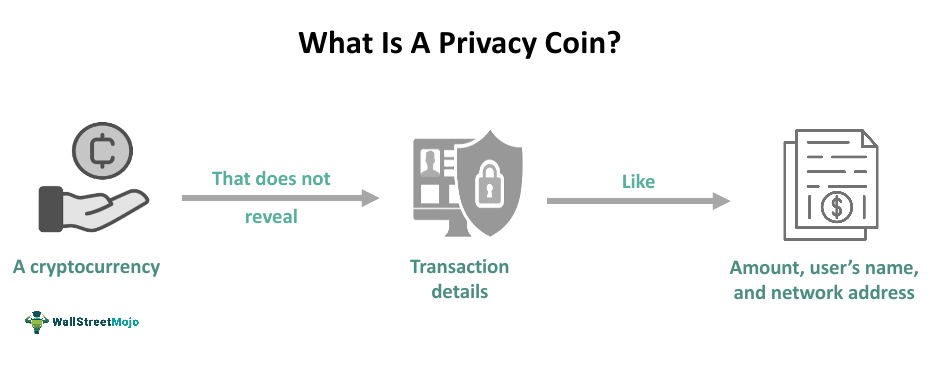
Privacy coins are cryptocurrencies designed to protect the privacy and anonymity of their users by hiding transaction details such as sender and receiver address, transaction amount, etc. These types of cryptocurrency use advanced cryptographic features to make transactions untraceable and unlinkable on the blockchain. Like other cryptocurrencies, Bitcoin and Ethereum operate on public blockchains, where every transaction is permanently recorded and open to everyone. This means anyone can perform on-chain analysis to trace funds, check wallet balances, and monitor the movement of coins across any public address, providing full transparency. But in case of privacy, these are hidden.
Privacy coins are cryptocurrencies designed to protect the privacy and anonymity of their users by hiding transaction details such as sender and receiver address, transaction amount, etc. These types of cryptocurrency use advanced cryptographic features to make transactions untraceable and unlinkable on the blockchain.
Like other cryptocurrencies, Bitcoin and Ethereum operate on public blockchains, where every transaction is permanently recorded and open to everyone. This means anyone can perform on-chain analysis to trace funds, check wallet balances, and monitor the movement of coins across any public address, providing full transparency. But in case of privacy, these are hidden.
How Do Privacy Coins Work?
The main objective of privacy coins is to protect users from being tracked, which can be achieved by integrating cryptographic privacy protocols into their blockchain architecture to obscure transaction data such as wallet addresses, transaction amounts, and user identities. Here’s how they achieve it technically by integrating some layers.
Stealth Address
This privacy layer is used to create a new address and hide the previous address on the blockchain, making every transaction untraceable, most notably Monero. So if anyone wants to trace a transaction, they will need a private view key from the address owner. The whole key idea is simple but powerful. The receiver publishes one public address, but every incoming transaction is sent to a unique, one-time address that cannot be linked back to them.
In simple terms, a stealth address is like giving someone your bank account number, but every time they send you money, the system secretly creates a brand-new account that only you can access, and no one can prove it’s yours.
Ring Signatures
Different from stealth addresses, this layer is used to hide the sender's identity on the blockchain. So no one can identify the sender but can verify that one member of a group signed the transaction, but no one can determine which one. A ring signature involves one real signer (the actual sender) and multiple decoy signers called mixins. The signer owns one of the private keys in the group without revealing which one. When a sender initiates a transaction, a cryptographic multiple decoy signer is added to it with the original signer in a ring signature. For example, if the ring size is seven, then possible signers will look like A, G, S, Y, Q, J and T while the real signer is S, hiding the original sender.
Ring Confidential Transactions (RingCT)
This is an advanced layer of ring signature; in this a cryptographic mechanism is used to hide the transaction amounts while still allowing the network to verify that the transaction is valid. With this, no one can see transaction amounts, wallet balance and payment pattern. It's like sealing money in opaque envelopes where everyone can count envelopes going in and out and confirm totals match, but no one can see how much cash is inside.
Zero-Knowledge Proofs (ZKPs)
A privacy coin like Zcash is using this to prove that a transaction is valid without revealing any details. Zcash uses a specific type of ZKP called zk-SNARKs that only shows the proof and validity flag (true/false), hiding the sender, receiver and amounts.
Advantages of Privacy Coins
- It provides strong financial privacy by hiding the sender, receiver, and transaction amount from public view.
- Since all important things are hidden, it gives protection from surveillance and prevents governments, corporations, and hackers from tracking on-chain financial behavior, which reduces risks of targeted attacks, extortion, or theft.
- It has a true fungibility feature, meaning every coin is identical; no coin can be blacklisted or tainted.
Disadvantages of Privacy Coins
- Hard to acquire because many platforms, especially centralized exchanges, remove privacy coins to avoid compliance issues. Also merchants and institutions are cautious about accepting them.
- Heavy regulatory pressure: many countries have banned these kinds of coins. Viewed negatively by regulators, banks, and media.
- Responsible for facilitating crimes such as money laundering, darknet marketplaces, tax evasion and terror funding.
- Because everything is hidden, it's hard to scale for broader use cases.
- Privacy data increases storage requirements, which increase the transaction size and processing cost.
Popular Privacy Coins
Let's look at some different types of privacy coins available in the market.
Monero (XMR)
Launched in 2014, Monero provides default user anonymity using the technologies of stealth addresses, ring signatures, and RingCT, allowing payments to be made quickly without censorship fear. Currently it is trading below 370 USDT with a $7 billion market cap.
Zcash (ZEC)
Based on the Bitcoin codebase, Zcash was launched in 2016. It uses zk-SNARK technology for privacy and anonymity. Because its codebase copies Bitcoin, it provides optional anonymity levels based on users' requirements. Currently it is trading near 280 USDT with a $5 billion market cap.
Dash (DASH)
It is a Bitcoin-forked and a payment-focused cryptocurrency. To carry out secure transactions, Dash uses two-tier networks. Currently it is trading near 35 USDT with a $450 million market cap.
Decred (DCR)
Decred’s security, privacy, scalability, and decentralized treasury empower stakeholders and provide them with the tools needed to enhance their financial sovereignty. Trading at 28 USDT with a $460 million market cap.
Beldex (BDX)
It focuses on a decentralized internet, protecting users' privacy and masking users' interactions on the internet, including chat, browsing, payments and everything. Trading at 0.08 USDT with a $600 million market cap.
Bitcoin vs Privacy Coins
Features | Bitcoin | Privacy Coins |
Blockchain Type | Public, transparent blockchain | Public, transparent blockchain |
Sender Privacy | No | Yes |
Receiver Privacy | No | Yes |
Fungibility | Limited (coins can be tainted) | Strong (all coins equal) |
Traceability | Fully traceable | Extremely difficult to trace |
Transaction Speed | Faster | Slightly slower |
Fees | Generally lower | Higher due to data size |
Scalability | Better | Reduced due to privacy overhead |
Security Model | Proof of Work | Proof of Work/ZK Based |
Conclusion
While privacy coins offer promising use cases, they continue to face criticism due to their use in illicit activities. Governments around the world are actively attempting to regulate or even ban such assets; however, without proper frameworks, it is not possible.
From a user’s perspective, privacy coins help create a secure ecosystem that protects financial data and assets from unnecessary exposure. At the same time, it is important to understand that privacy coin technology is designed to safeguard user rights, not to promote tax evasion or unlawful activities.