Launchpads and Token Listings: The Process, Due Diligence, and Long-Term Impact on Project Success

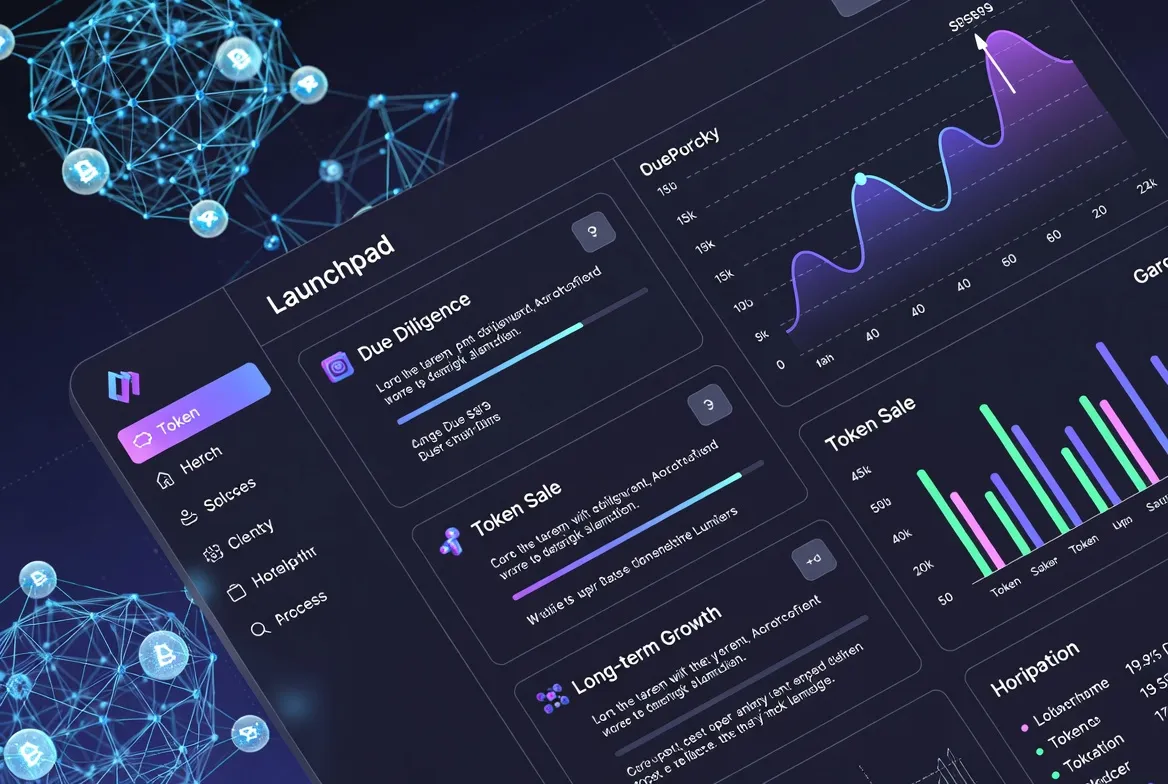
This article covers how launchpads and due diligence shape token listings.
Launching a token in 2026 is no longer the chaotic free-for-all it was during the early ICO (Initial Coin Offering) days. It has become a deliberate, high-stakes process.
Smart founders and sharp traders both know that getting listed properly can make or break a project. The real question is not just how to raise funds, but whether the launch sets the project up for real staying power or just a quick pump and painful dump.
Centralized exchange listings and launchpads serve as organized entry points. They add layers of filtration to identify serious companies from those chasing hype while connecting viable blockchain projects with financing and liquidity.
Think of it like applying to a respected accelerator instead of shouting your idea into a crowded room. The best ones do more than raise money. They provide visibility, credibility, and early infrastructure.
What Launchpads Do
Fundamentally, launchpads enable early-stage enterprises to sell tokens to approved investors prior to the start of public trade.
Formats vary as some run as decentralized IDOs with staking requirements for access, while others operate as IEOs through exchanges, offering more built-in trust and immediate liquidity. Many now mix both approaches with added incubation support.
In addition to fundraising, strong launchpads provide initial liquidity pools, technical support, and marketing reach.
This means a chance at early entry with some screening in place for traders and exposure to a curated audience rather than hoping for organic discovery on a random DEX for founders.
LBank’s Launchpad stands out by carefully selecting projects, usually focusing on areas that have genuine potential, such as DePIN, AI-integrated Web3, and metaverse infrastructure.
Users commit USDT during warming-up or active sale phases, with relatively accessible minimums. Past featured projects include unique ideas, such as Solana-based oracles for IoT devices and AI-driven ecosystems targeting gaming and digital culture.
These selections demonstrate a preference for initiatives that seek to address actual issues rather than merely following trends.
The Added Layer of Venture Support
Many platforms now combine launchpads with venture arms for deeper involvement. LBank Labs, with its $100 million Fund of Funds, targets pre-seed and early-stage Web3 startups.
They evaluate opportunities through a framework that looks at platform strength, standards, and ecosystem potential.
Founders gain not only capital but also mentorship and connections to experienced players in the space.
This early-stage support often creates a smoother path toward a public launch. In order to gain momentum for a launchpad sale and eventual exchange listing, a project may first gather smart money and advice.
For traders keeping an eye out for new chances, seeing reliable early backing might be a subtle but significant hint.
How the Process Unfolds
The journey usually moves through several overlapping stages. Teams begin by preparing a solid whitepaper, thoughtful tokenomics, audited smart contracts, and at least a working prototype.
Applications go through dedicated portals, and on platforms like LBank, the process includes a streamlined form, with early ideas sometimes routed directly to the Labs team for potential pre-seed interest.
Initial screening checks for basic viability, innovation, team strength, and market fit, then approved projects enter deeper due diligence and negotiations covering listing terms, promotion, token allocation, and technical integration.
The sale phase, which involves investors participating through staking, lotteries, or direct commitments, typically at a fixed early price with vesting schedules designed to discourage immediate selling, then follows. After distribution, the token generation event occurs, liquidity is seeded, and the token goes live for trading.
Post-listing is where many projects either build momentum or quietly fade. Ongoing responsibilities include community communication, liquidity maintenance, and regulatory compliance.
The strongest setups often combine multiple steps: early venture investment, a successful launchpad round, and a seamless listing on the supporting exchange.
Due Diligence: The Real Filter
This stage separates the wheat from the chaff. Reputable platforms treat thorough vetting as essential because their own reputation is on the line.
Key focus areas include team background and experience, sustainable tokenomics with reasonable vesting and actual utility, mandatory third-party security audits, regulatory compliance such as AML readiness and legal opinions, and evidence of genuine community engagement rather than artificial inflation.
LBank, for example, aims for quick initial feedback within 48 hours while prioritizing innovation and strong network effects in final selections.
This multi-layered approach significantly reduces the risk of obvious scams compared to fully permissionless DEX launches. Still, no process can fully predict whether a team will execute well once the funds arrive.
The Long-Term Reality Check
A well-executed launchpad or listing comes with real advantages like immediate legitimacy, improved price discovery through expert liquidity support, and simpler access to subsequent rounds.
Association with a respected name can attract organic interest and partnerships that might otherwise take years to build.
Also, lots of projects, irrespective of the initial hype, can experience sharp decline, especially when the fundamentals aren't solid.
Weak vesting, missed milestones, or over-reliance on market momentum often leads to heavy sell pressure, making even solid ideas struggle in bearish conditions.
The projects that endure tend to share common habits, which include consistent transparency, steady product development, adaptive token mechanics such as buybacks or burns, and real-world utility that brings actual users.
In terms of managing the post-launch phase, those who have the advantage are those who receive continuous help from their launch platform.
Conclusion
If you are a trader scanning opportunities, treat platform vetting as useful context but never a substitute for your own research.
Look closely at audit quality, unlock schedules, team transparency, and on-chain metrics. Only commit capital you can afford to lose, and pay more attention to delivery than launch-day excitement.
For founders, view the due diligence process as valuable preparation rather than just a hurdle. Focus on building real communities early, real utility, and view this listing as the starting point, not the end goal.
Launchpads and structured listings have provided much-needed structure to cryptocurrency fundraising. They help to filter quality and provide infrastructure, which raw DEX launches frequently lack.
Platforms that combine selective sales with venture-style support show how exchanges can play a broader enabling role.
At the end of the day, the launch itself is only one chapter. What separates fleeting successes from lasting ones is almost always the discipline, adaptability, and execution that follow once the initial spotlight fades, and in a maturing market that increasingly rewards substance over spectacle, those are the projects worth watching most closely.