How Deepfake Phishing Targets Your Crypto Wallet (and Why the Old Rules Failed)

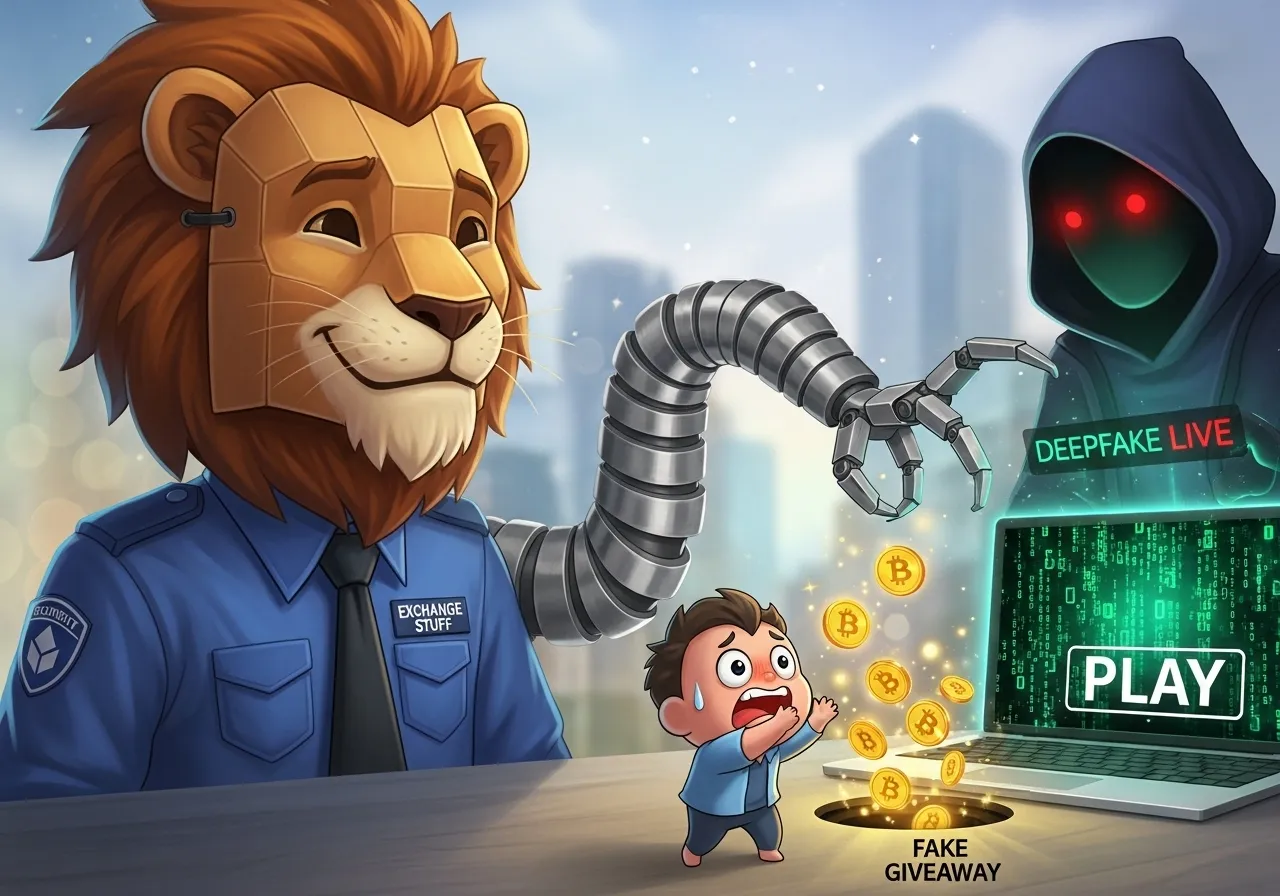
Deepfake phishing stole over $311M from crypto wallets in January 2026 alone. Learn the five attack types targeting traders right now and how to protect your assets before it is too late.
The stream looked completely real. It showed Vitalik Buterin sitting in what appeared to be a live conference hall, speaking directly into the camera about a new Ethereum foundation giveaway. The production quality was high. The voice was right. The mannerisms were right. The donation address appeared on screen with a countdown timer. Send ETH now and receive double back within 24 hours.
A trader in London watched for two minutes, recognised the face and the voice, and sent 1.4 ETH. The countdown expired. Nothing came back. By the time he searched for the original stream, it had been taken down. The address had already collected funds from 340 other wallets before the platform removed it.
He did not click on a suspicious link. He did not ignore a grammatical error. He watched what looked like a real person saying real things in real time. That is what makes deepfake phishing different from every scam that came before it, and that is why it is draining hundreds of millions of dollars from crypto wallets right now.
Why the Old Rules No Longer Work
For years, the advice was straightforward: check for bad grammar, look for suspicious links, verify the sender's email address, and never click anything that feels off. That advice protected people against the phishing attacks of 2018 and 2019. It does not protect them against what is happening in 2026.
Deepfake phishing removes every traditional red flag. The messages are grammatically perfect because they were written by AI. The branding matches legitimate exchanges down to the font and colour. The voices are indistinguishable from real people. The video is synchronised, fluid, and contextually accurate. And the urgency feels genuine because it is delivered through channels traders trust: YouTube live streams, Telegram announcements, and email addresses that look identical to the real ones.
In January 2026 alone, phishing attacks drained more than 311 million dollars from crypto users. Impersonation scams grew 1,400 percent year over year in 2025. AI-enabled scams were 4.5 times more profitable than traditional scams.
The scale is not theoretical. Chainalysis estimates that scammers stole roughly $ 17 billion through crypto scams and fraud in 2025, and early 2026 data suggest that figure will be exceeded before the year is out. The average payment per victim grew from 782 dollars in 2024 to 2,764 dollars in 2025, a 253 per cent increase. Attackers are no longer casting a wide net. They are targeting fewer people for larger amounts, and they are succeeding.
Five Ways Deepfake Phishing Targets Crypto Traders
1. Fake Celebrity Endorsement Videos
This is the attack that caught the trader in the opening story. Scammers generate AI video of well-known figures, including Elon Musk, Michael Saylor, and Vitalik Buterin, promoting fake token launches, giveaways, or investment opportunities. The quality has reached a point where most viewers cannot distinguish the fake from real interview footage or live streams. The cryptocurrency sector accounted for 88 per cent of all detected deepfake fraud cases in 2023, and the numbers have grown every year since. These videos are typically deployed through fake YouTube accounts, hijacked legitimate channels, or paid social media advertisements that use the same branding as the person being impersonated.
2. Voice Cloning Impersonation
This one is more targeted and more dangerous because it feels personal. Voice cloning technology now requires just three to five seconds of sample audio to create a convincing replica of any voice. Scammers scrape audio from podcasts, YouTube interviews, Twitter spaces, and conference recordings, then use the cloned voice to call traders directly, pretending to be exchange support staff, a financial advisor, or, in some cases, a friend or colleague whose voice they have harvested from public recordings. The caller tells you there is a problem with your account, that an unauthorised withdrawal has been flagged, or that you need to verify your seed phrase immediately to prevent a loss. The voice sounds right. The urgency feels real. And the call is coming directly to your phone.
3. Deepfake Live Streams
Fake live streams on YouTube and social media platforms are one of the fastest-growing deepfake attack vectors in crypto. Attackers create a stream that appears to show a prominent figure in a real-time announcement. A countdown timer runs on screen. A wallet address is displayed for donations or participation. Viewers who join mid-stream see the address receiving funds in real time, which creates social proof that the giveaway is legitimate. By the time the platform removes the stream, dozens or hundreds of wallets have sent funds to an address that the attacker controls. Signature phishing losses jumped 207 per cent in January 2026 compared to December 2025, and live stream attacks are a significant driver of that increase.
4. AI-Generated Phishing Emails
The phishing email of 2026 looks nothing like the ones from five years ago. AI generates messages that perfectly replicate the tone, branding, and writing style of legitimate exchanges. The logo is correct. The footer matches. The language sounds like something a real compliance team would write. The email tells you that your account has been flagged for review, that a withdrawal has been initiated, or that you need to complete a verification step within 24 hours. The link in the email leads to a website that looks identical to the real platform. Every field you fill in goes directly to the attacker. Deepfake-related incidents in crypto rose 654 per cent from 2023 to 2024 and are continuing to accelerate. The email is no longer the weak link it once was. Now it is the most convincing part of the attack.
5. Wallet Drainer Sites and Physical Letters
Two attack vectors that most traders do not expect. Wallet drainer sites mimic legitimate wallet interfaces and DeFi platforms. When a user connects their wallet to claim a fake airdrop, bonus, or NFT drop, a malicious smart contract executes automatically and drains all assets from the connected wallet. Blockchain transactions are irreversible. There is no support team to call and no chargeback to file. In early 2026, Safe Labs uncovered a coordinated campaign involving 5,000 malicious addresses linked to wallet drainer tools. The second vector is even more unexpected: physical mail. Scammers are now sending official-looking letters impersonating hardware wallet companies like Ledger and Trezor, printed on branded letterhead, claiming users must complete a mandatory authentication update. Each letter includes a QR code leading to a fake setup website. The final step asks for the wallet recovery phrase.
If any communication, digital or physical, asks for your seed phrase or recovery words, stop immediately. No legitimate exchange, wallet company, or support team will ever ask for this information under any circumstances.
The Red Flags That Still Work in 2026
Traditional red flags are gone, but deepfake attacks still leave traces. Here is what to watch for:
- The URL is rarely perfect. Deepfake sites use domains that are one character off from the real thing: lbank-secure.com instead of lbank.com, or ethereurn.org with a subtle letter swap. Always type the URL manually rather than clicking a link.
- Giveaways that require you to send first are always scams. No legitimate organisation asks you to send crypto to receive more back. This rule has never had a single exception.
- Urgency is a weapon. Any message, call, video, or email that creates artificial time pressure is designed to stop you from thinking clearly. Legitimate platforms do not give you 15-minute windows to verify your identity before funds are frozen.
- Celebrity figures do not run public giveaways through live streams. If a prominent person appears to be giving away crypto online, they are not. Every single instance of this format has been a scam.
- Check the stream or video account history. A YouTube channel running a live stream of Vitalik Buterin that was created three days ago is not real. Legitimate channels have years of content, consistent subscriber growth, and verifiable history.
- Real exchange support does not call you unsolicited. If you receive a call from someone claiming to be from LBank, Binance, or any other exchange, hang up and contact the exchange directly through their official website to verify.
- Physical letters from hardware wallet companies asking for security updates are not real. Ledger, Trezor, and other hardware wallet manufacturers communicate through the official app or email associated with your account registration, never through postal mail with QR codes.
How To Protect Your Crypto Wallet
Awareness is not enough. Here is a practical protection checklist built specifically for the threat environment of 2026:
- Never share your seed phrase or recovery words with anyone, anywhere, for any reason. Store them offline, written on paper, in a location only you control.
- Use a hardware wallet for any holdings above what you would carry as spending money. Hardware wallets keep private keys offline and out of reach of browser-based attacks, wallet drainers, and malware.
- Enable withdrawal address whitelisting on every exchange you use. This prevents funds from being sent to new addresses without additional verification, even if your account is compromised.
- Bookmark the official URLs of every exchange and wallet you use and only access them through those bookmarks. Never follow links from emails, social media, or messaging apps.
- Disconnect your wallet from every DeFi site or platform after you finish using it. Leaving a wallet connected gives malicious contracts ongoing access to approve future transactions.
- Review and revoke token approvals regularly using tools like Revoke. cash or Etherscan's token approval checker. Unlimited approvals granted in the past can still be exploited later.
- Turn on two-factor authentication using an authenticator app rather than SMS on every crypto account. SMS-based two-factor authentication can be bypassed through SIM swapping attacks.
- Before interacting with any platform claiming to offer an airdrop, bonus, or giveaway, verify its legitimacy through the official exchange announcement channels, never through the link provided in the offer itself.
- If you receive a voice call from someone claiming to be exchange support, hang up and call back through the official support number listed on the exchange's website. Voice cloning is sophisticated enough that recognising a voice is no longer a reliable verification method.
The average scam payment per victim grew by 253 per cent in one year. Attackers are getting better at targeting people who should know better. Preparation is the only reliable defence.
What This Means for Your Trading
Deepfake phishing is not a niche threat affecting only inexperienced traders. The 1,400 per cent growth in impersonation scams and the 311 million dollars drained in a single month tell a different story. These attacks are reaching people who have traded for years, who understand crypto, and who thought they knew what to look for.
The technology behind these attacks will not get less sophisticated. Attackers now have access to tools that cost almost nothing to run, generate attacks that look and sound completely real, and target people at a scale that was impossible two years ago. The only reliable response is to change how you verify everything, not just what you look for.
Trust the process, not the presentation. Verify through official channels, not through the channel that is asking for your trust. Slow down when anything feels urgent. And protect your seed phrase like it is the only key to everything you own, because in crypto, it is.