A Vote That Came Down to the Wire
The House passed the funding package 217-214, just a few votes short of failure. With its passage, the partial government shutdown will end once the President signs the bill. Most major departments will receive funding immediately, though some agencies, such as Homeland Security, still have unresolved issues that Congress has approximately ten days to address.
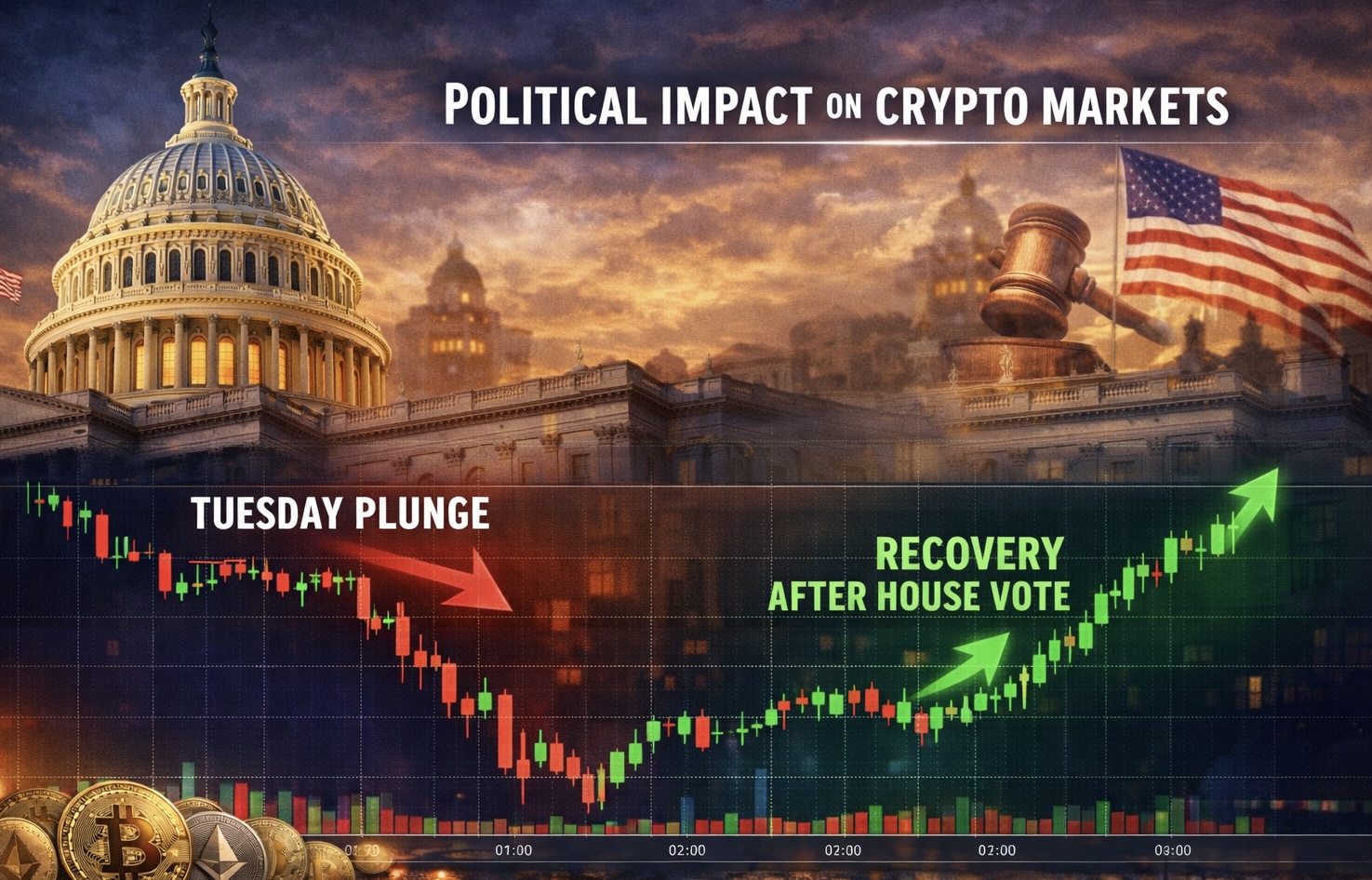
Market observers note that this development effectively relieved crypto markets that had been under significant pressure. The uncertainty surrounding the shutdown had caused widespread panic selling across digital assets.
What the Day Looked Like
The earlier sell-off was not a minor correction but a full-blown panic. Many gains accumulated in previous months were temporarily erased as market participants liquidated positions in response to uncertainty.
The timing of the shutdown amplified the effect. Markets generally react negatively to uncertainty, and a partial government shutdown creates exactly the type of environment where investors retreat from riskier assets. Crypto, due to its inherent volatility, tends to be the first sector affected by such panic.
Why This Funding Bill Actually Mattered
Government shutdowns disrupt markets in ways beyond immediate operational concerns. Key economic reports are delayed, regulatory agencies operate on minimal staff, and federal workers’ pay is interrupted, affecting overall economic activity.
For crypto, shutdowns add another layer of opacity to an already complex regulatory landscape. Agencies such as the SEC, CFTC, and Treasury influence the market, and when they are partially offline, uncertainty around enforcement actions or new rules increases.
Markets tend to assume the worst when information is limited. By passing the funding bill, Congress removed a significant portion of that uncertainty, which helped stabilize digital assets temporarily.
What Flipped When the Votes Came In
The rebound was gradual, but selling pressure eased once it became clear the bill would pass. Digital assets stabilized and began recovering from earlier panic, with most cryptocurrencies following a similar pattern, though some lagged behind.
The narrow margin of 217-214 highlights how fragile the situation is. A few different votes and the shutdown could have continued, demonstrating that political dysfunction around spending matters remains a risk. Despite this, the immediate relief was sufficient to halt the panic.
The Volatility Reality Check
This episode underscores a fundamental truth about crypto: extreme swings are not anomalies but a normal feature of the market. Prices can fluctuate dramatically in hours in response to political developments, regulatory announcements, or shifts in investor confidence.
Unlike traditional equities, which primarily respond to earnings and economic fundamentals, crypto reacts strongly to macro events, sentiment, and regulatory uncertainty. While a government funding bill does not affect the underlying blockchain technology, it has a direct impact on market behavior.
Where Things Go From Here
The immediate panic has ended, but markets remain highly sensitive. Stabilization does not guarantee sustained recovery, and unresolved deadlines at key agencies could trigger another wave of volatility.
In the long term, digital assets will continue to respond to political, regulatory, and macroeconomic developments, even if these events do not directly affect blockchain technology. For now, the free fall has stopped, but future swings are likely as Congress and other institutions navigate upcoming challenges.