In mid-February 2026, the Aptos Foundation released radical new proposals for how to govern the APT token. The proposal is to de-emphasize the use of unlimited emissions and subsidy-driven incentives in favor of performance-based mechanisms for motivating users of the network to use tokens—this could potentially result in the APT token becoming deflationary over time.
The updates were announced on X on February 18-19, 2026, and have been designed to help the network grow up and gain large institutional customers, while at the same time making sure that the supply of tokens remains in sync with actual usage of the network.
Key Elements of the Proposal
The most significant change is our hard limit of 2.1 billion APT tokens at the protocol level--creating a new scarcity. There are now approximately 1.196 billion APTs in circulation (i.e., after launching with 1 billion and rewarding stakers), leaving 904 million APTs to be created (primarily in the form of staking rewards) in the future.
Other changes include:
- Annual staking yields will be reduced from 5.19% to 2.6% (higher yields are possible with longer lockups)
- Initial gas fees will increase to as much as 10x and will be paid in APTs, fully burned
- Foundation-held tokens (210 million APT, "approximately $180 million") will be permanently locked and staked
- Future grants will shift to performance-based models (KPI-triggered)
- Network revenues may be utilized to fund token buyback programs
Our goal is to transition away from subsidizing the bootstrap phase of our network towards a mechanism where transaction volume creates more burns (through fees and other actions) than new issuance, similar to Ethereum's EIP-1559 burn model, but representing Aptos-specific adjustments.

Easing Unlock Pressure
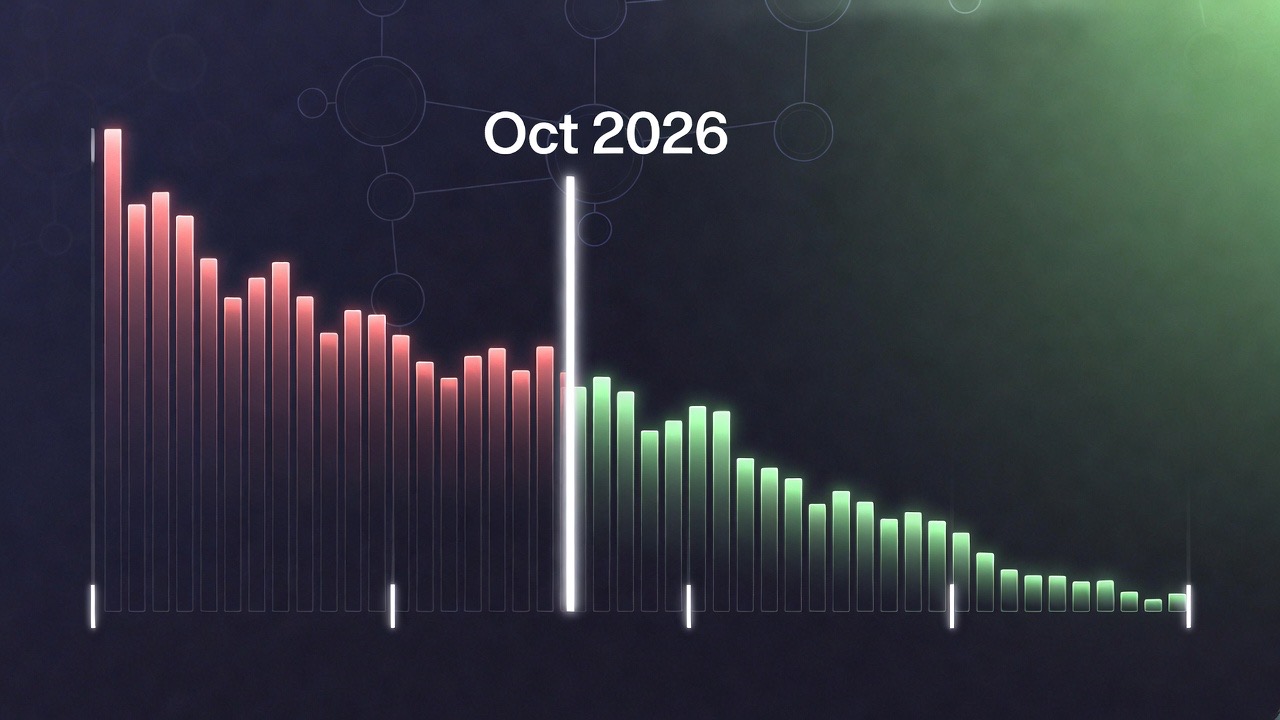
Since Aptos was negatively affected by the ongoing sales pressure associated with the scheduled unlocks of early-stage investors, teams, and the allotment of ecosystem tokens — as is the case for almost all new Layer 1 launches — we report some good news from the Foundation regarding these transactions. The end of a significant unlock cycle (4-year) will occur in October 2026, which will contribute to approximately 60% of new supply being unlocked during that time. The ongoing decline in funding distributions (expected to be over 50% year-on-year decline for both 2026 and 2027) will continue to provide positive trends as the model continues to be developed.
Institutional Momentum Fuels the Change
The maturity of a network is reflected in its proposals. Major players such as BlackRock, Franklin Templeton, and Apollo have now launched "hundreds of millions on-chain" through the Aptos Network.
The following are examples of real-world financial products created using blockchain technology. The funds are examples of projects that were not test cases and produced real financial items.
It is clear that institutions are investing a substantial amount of capital into the cryptocurrency markets, therefore a subsidy-based model was appropriate during the early years when the network was being built. The network is now processing a large volume of transactions by large established financial institutions. That brings, a substantial redesign of the Tokenomics is required to facilitate continued use and long-term alignment.
Performance-Driven in Practice
According to the plan, supply will adjust based on usage metrics, primarily through transaction volume. If usage increases, then fees will be burned, which could create net-deflationary conditions when usage increases (e.g., because of high-performance applications or institutional tools such as Decibel DEX). This is similar to what happened after Ethereum's post-2021 fee burn, but is being done in a way specific to Aptos’ architecture. As usage increases, validators will start relying more heavily on fees and less on emissions.
All of these changes will require Aptos’ on-chain governance mechanisms to approve any of the modifications made to the Aptos network. APT holders will vote directly for changes being made.
What to Watch Next
Three major drivers for success:
Governance buy-in with strong participation.
Actual transaction growth to enable meaningful burn.
Ongoing (or increased) institutional investment by BlackRock, Franklin Templeton, Apollo or others.
Material tests will begin in October 2026. Those tests will occur alongside newly established supply relief from Unlock and new framework rollout. APT could find itself structurally short if the amount of burns exceeds the amount of issuance subsequently.
These proposals give us confidence in the direction of Aptos, but the success of this dramatic pivot rests with execution and community support before we can determine long-term value.
References
- Aptos Foundation X Announcement — Tokenomics update and proposals (Feb 2026)
- The Defiant — Hard cap, lock, and deflation details (Feb 19, 2026)
- ForkLog — Emission cut and cap overview (Feb 2026)
- CryptoRank — Staking reduction and burn mechanics (Feb 2026)